

History of the Color Red
Cave walls, emperors, martyrs, and modern art

Human beings have been coloring things for as long as we’ve had a bit of time, some tools around, and the innate desire to leave behind a piece of ourselves. From handprints on Paleolithic cave walls to the industrial innovations of 19th-century chemistry, our species has been relentlessly invested in turning minerals, plants, metals, and even insects into something that could make surfaces a little more interesting to look at. And while today the tools have changed, the basic impulse remains the same—humans want to leave a mark. Preferably a colorful one.
So over the next few weeks, we’ll take a look at the history of different colors, starting with red.
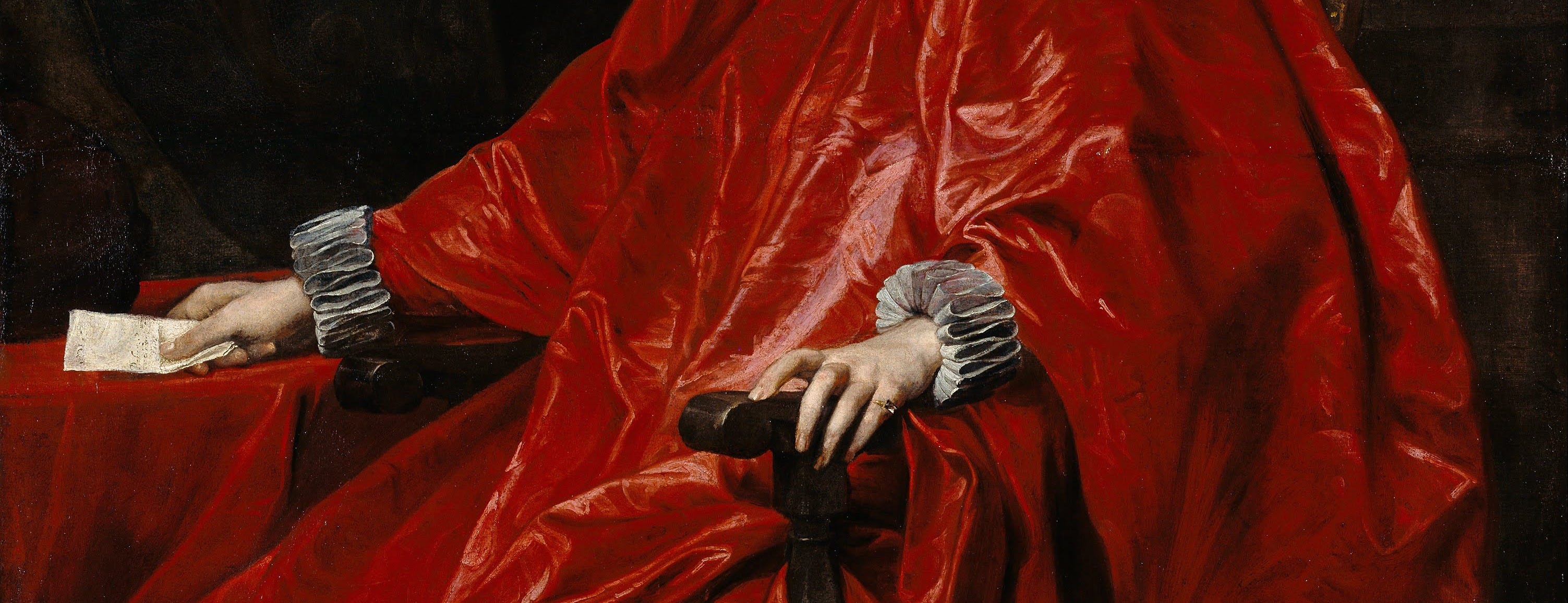
Why does red stop us in our tracks? A red light, a red warning, blood? Across cultures and history, red has come to signify love, pain, power, good fortune, and the divine. It’s the first color babies’ eyes notice after black and white, and one that is used the most on world flags - a whopping 74%.
To understand the significance of this color, let’s take a look at the 7 most common types of pigments that have found their way into artists’ mediums of choice:
Red Ochre
Cinnabar/Vermilion
Red Lead or Minium
Venetian Red
Cochineal Crimson
Madder Root
Modern Synthetic Pigments
Here is the rest of this six-part series:


Reminder: You can support Behind the Masterpiece and get access to members-only content for a few dollars per month, such as:
Access to paid subscriber articles
Unlock the full curriculum: From the ‘Language of a Masterpiece’ to the ‘History of Colors’
Ask me anything about your favorite works or upcoming museum trips
Ability to comment and join community chats
1. Red Ochre
The earliest artists from 100,000 years ago used ochre found in nature—in rocks, clay, and sand as a form of expression. Ochre is a family of naturally occurring earth pigments that offered our ancestors a palette of yellows, oranges, browns, and reds. Red ochre, in particular, owes its vivid hue to hematite, a mineral rich in iron oxide, which gives it its red tint. To transform raw ochre into usable pigment, early humans crushed it using wooden or stone tools, then mixed it with a fluid—water, saliva, or animal fat—to create a fixative. Then they got to work. They used their hands as brushes and made marks that survived tens of thousands of years.
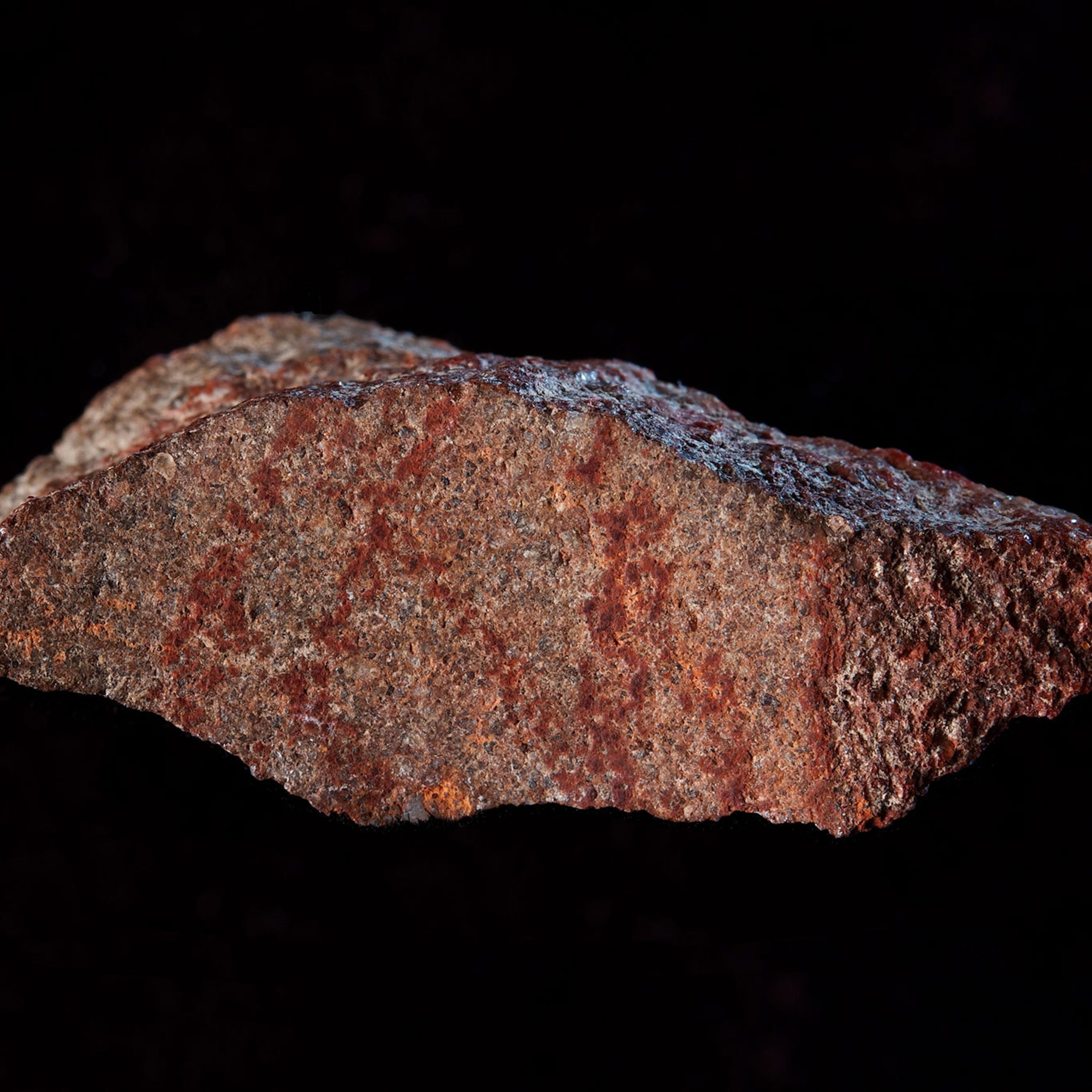
Pieces of ochre engraved with abstract designs have been found at the site of Blombos Cave in South Africa, dated to around 75,000 years ago. We can also see more recognizable figures in the El Castillo cave in northwestern Spain. These prehistoric handprints are at least 40,800 years old and are among the earliest records of art history: crimson hand stencils, and later, the occasional bison or horse sprawled across Spanish limestone cave walls. Archaeologists have proposed several explanations for these drawings. Some believe they were made to symbolically “kill” animals before a hunt, while others think they were visions created during trance-like states, influenced by the cold, dark, and quiet, sensory-deprived environment of the caves.

Philippe Descola, A French Anthropologist suggests early humans may “have preferred images over words to express complex thoughts.” It is even possible that certain objects or animals could not be named directly, perhaps due to taboos, so depicting them visually became essential. Regardless, there is a purpose here, a story, even if we don’t know what it means.
2. Cinnabar/Vermilion
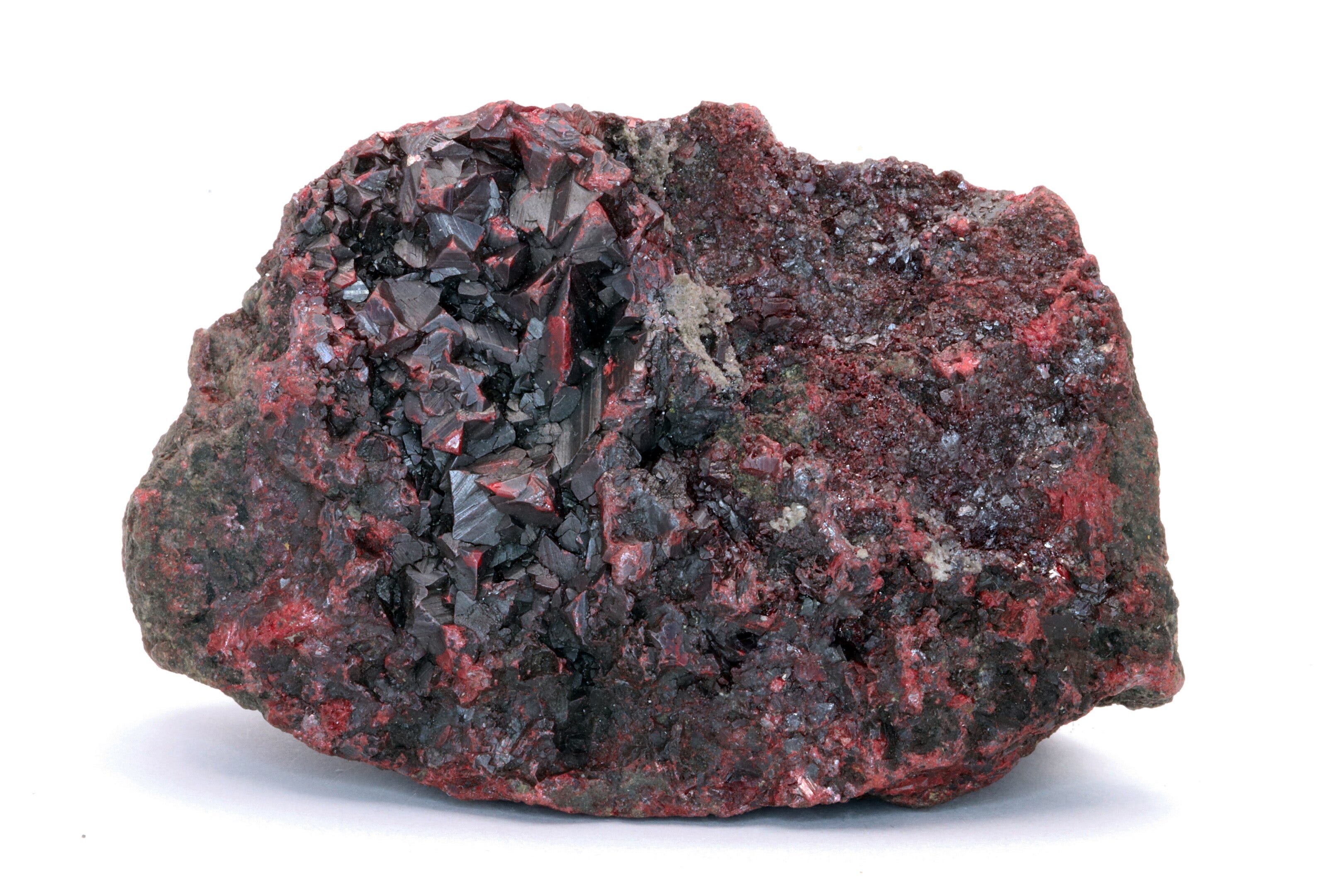
The mineral cinnabar was mined by many cultures around the globe as a precious resource since the 10th millennium B.C. Cinnabar is the most common ore of oxidized mercury, and it’s found in nature—in granular crusts or veins of hot springs and volcanoes. To use it as a pigment, Cinnabar was carefully crushed, washed, and heated, and the final result was a fire-truck red pigment called ‘vermilion.’ A bright shade that embodies the conditions its mineral source comes from, as well as its red-hot mercury toxicity.
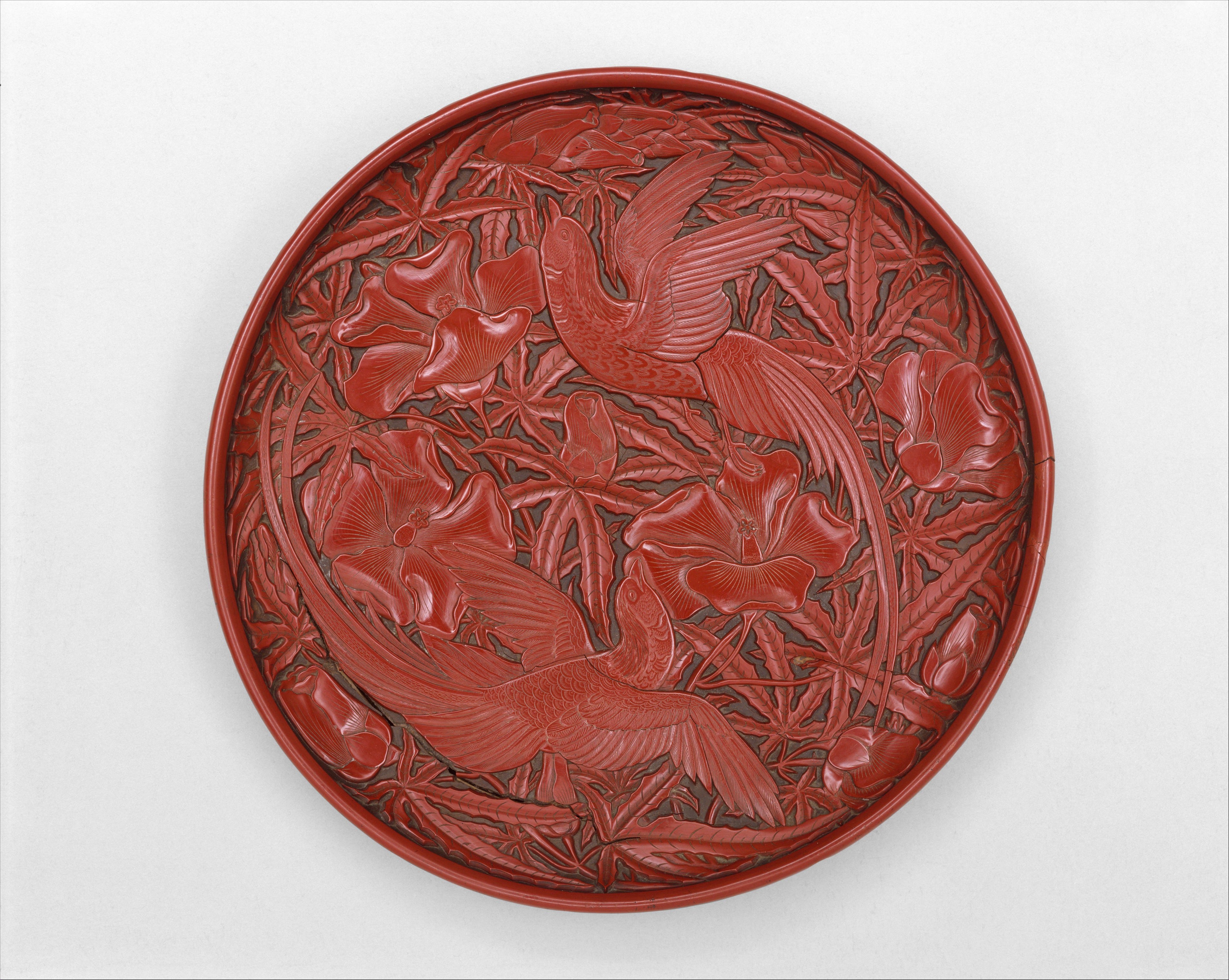
In China, records exist of Cinnabar being used on items from as early as the second millennium B.C. Historically, the color red is significant in Chinese philosophy, being associated with the five elements of the world—yellow for earth, white for metal, black for water, green for wood, and red for fire. And so it represents the traits of fire that make it so strong: its power, aggression, dynamism, and assurance.
For that reason, it was a favourite of Chinese emperors and was featured heavily in royal ceremonies. In fact, in the Tang-era painting of Chinese emperors from the Han to Sui dynasty, eleven of the thirteen emperors wear red robes to convey their royal power.

As a pigment, vermilion possesses many desirable qualities, including a deep hue, good covering characteristics of the medium it is being applied on, and compatibility with a number of canvases and objects, including drying oils, watercolor, egg tempera, and true fresco.
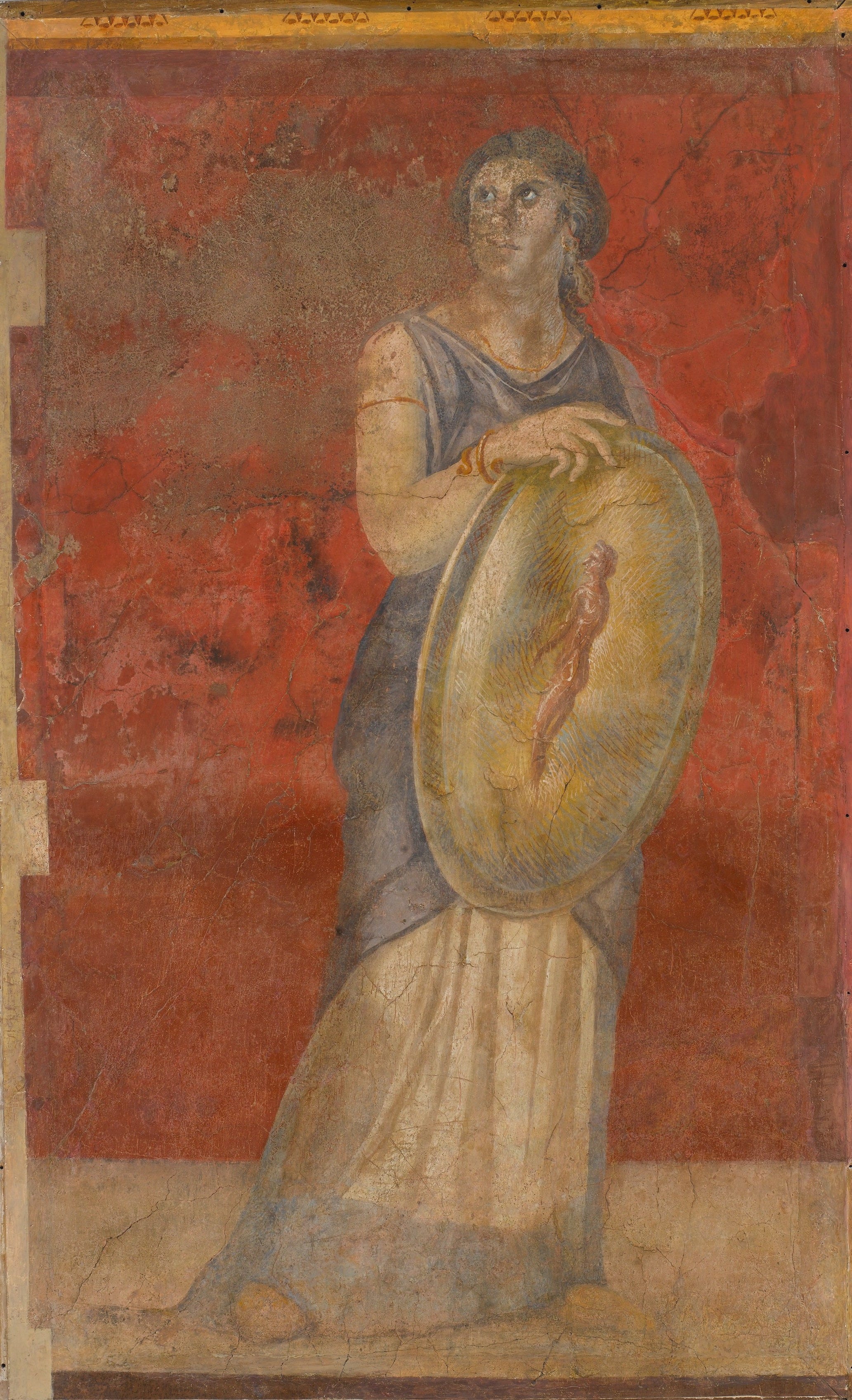
Two thousand years later, the Romans used cinnabar-made Vermilion in their frescos, statues, and some Roman women even used it as lipstick. We can see an example of this fresco here from the town of Boscoreale, which, being just north of Pompeii, was also destroyed by the eruption of Vesuvius. Pure cinnabar, however, was rare and expensive, and so to make it more readily available, the Roman government fixed its price at seventy Sesterces (approximately 700 USD) per pound—ten times the cost of the more humble red ochre. That’s right: ten times.
Back in the 4th century BC, the Chinese created a dry process to make synthetic Vermilion, which was a bit more controlled and a bit less toxic. However, synthetic vermilion did not become as commonly used until the 17th century, when a new method of processing it was developed in the Netherlands. The “Dutch Method” mixed melted sulfur and mercury together, heated it, and the vapors that were produced soon condensed as a bright red mercury sulfide. These crystals were then treated with an alkali, washed, and finally ground under water to yield the commercial pigment. Unfortunately, this pigment, which is normally an orangey-red, darkens to black when exposed to sunlight and time.
Synthetic vermillion was used extensively by Renaissance painters, including Titian, who painted luxuriant red cloths.
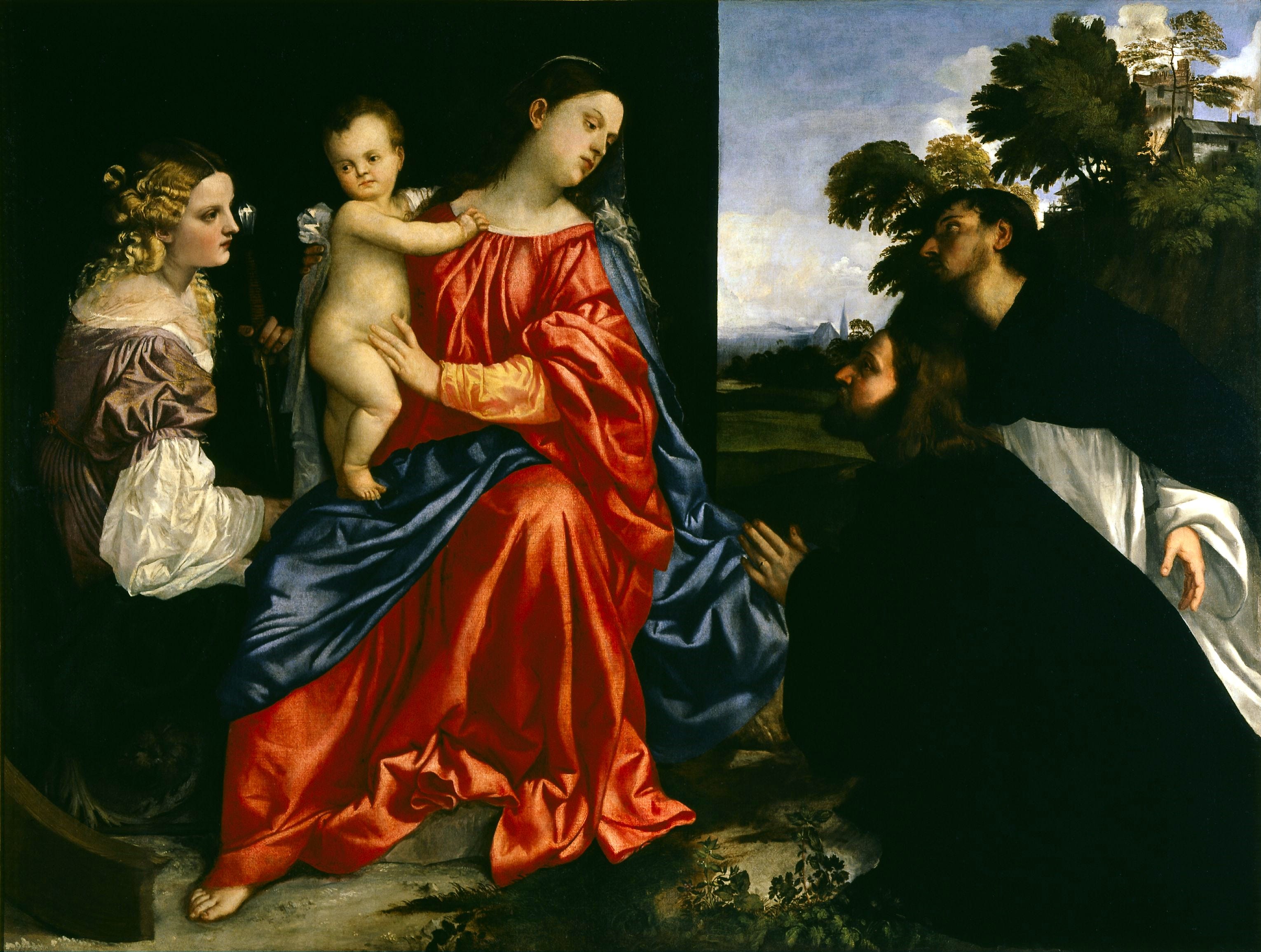
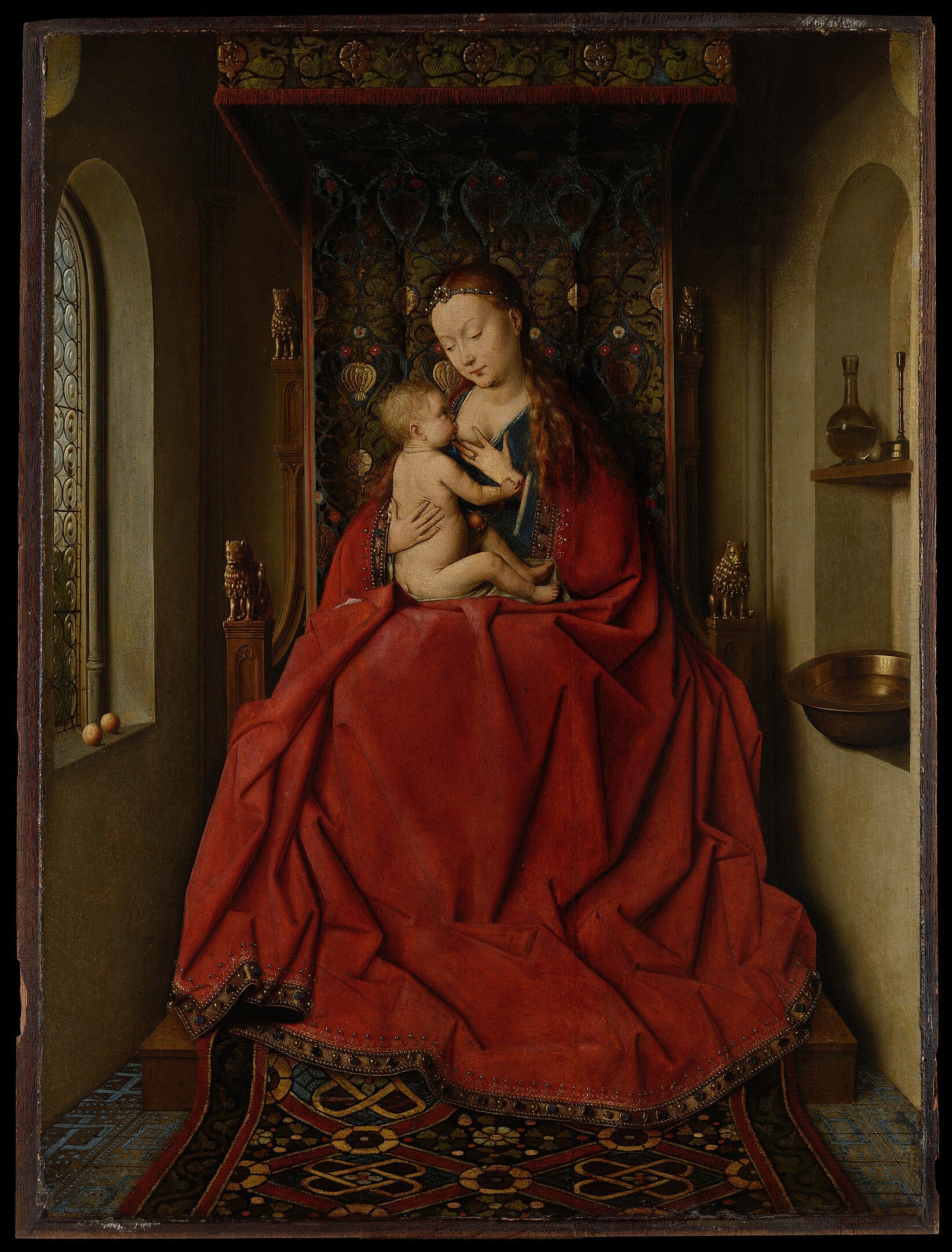
Red was also the official color of the clothes of religious leaders and the unofficial color of divine drama—Christianity’s visual shorthand for holiness with a hint of authority. The Madonna, Cardinals, and popes wrapped themselves in it, insinuating that a good splash of crimson proved their god-given divinity. We can see that here, in Jan van Eyck’s painting of the Madonna, done with synthetic vermilion. Our subject, donned in a red cloak that pours down the canvas, completely fills this room. Her hand supports Christ’s back as she feeds him. We are in a heavenly setting suggested by the wealth of the material things.
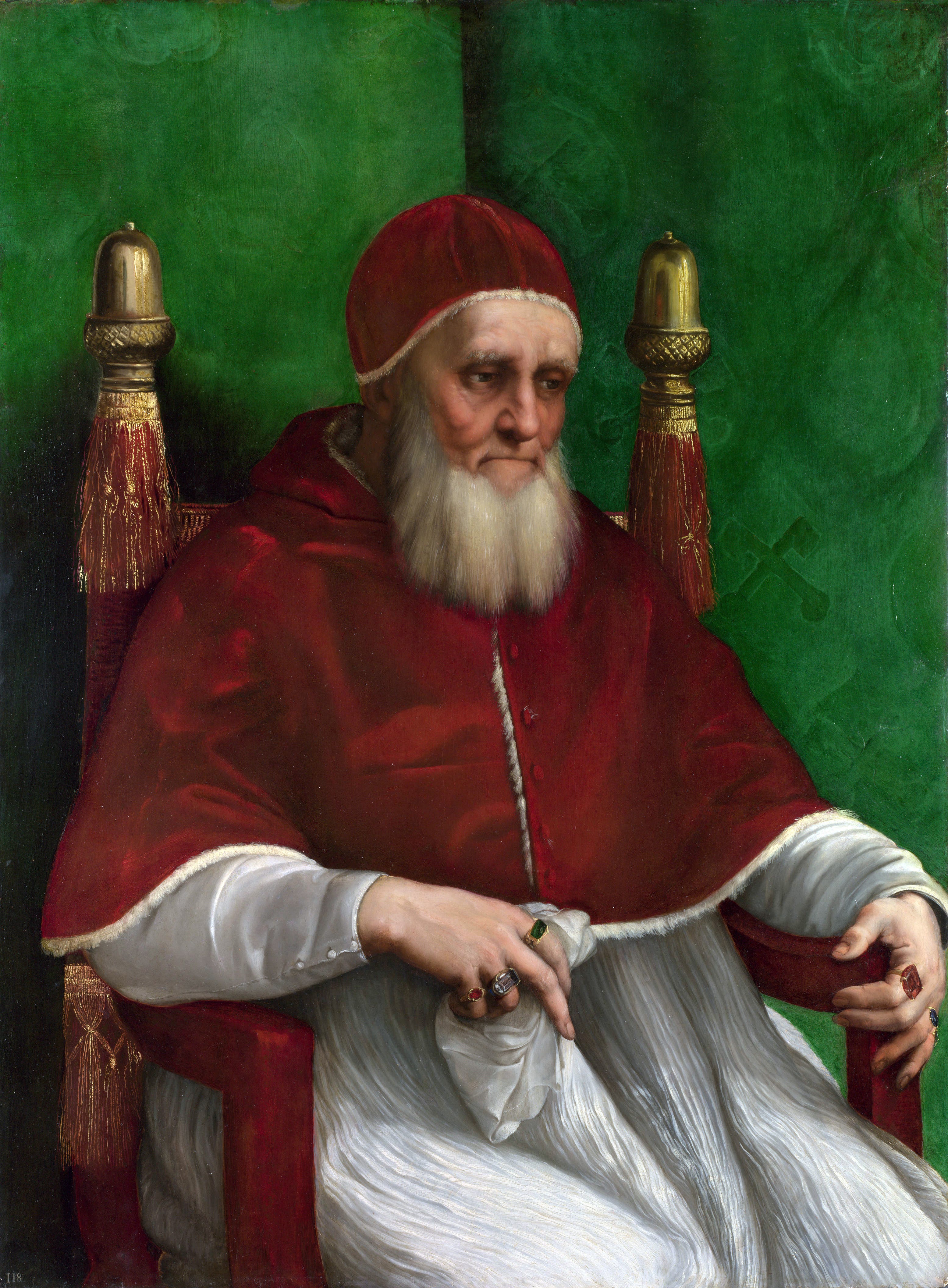
You might be familiar with the fact that in the Catholic church, the color red carries with it a sense of authority. Here we see Pope Julius II in his vermilion-red robe. He dominates the composition as the only point of interest, but not through a self-affirming facade as was common in the past; in fact, he looks worn down. The painting dates from June 1511 to March 1512, when he grew a beard to mourn Bologna’s loss in the War of the League of Cambrai. Not only was he a great patron of the arts—commissioning the Sistine Chapel, Saint Peter’s Basilica, and Raphael’s frescos—he was also a fearsome leader. His policies during the Italian Wars strengthened the Papal States, increased centralization, and maintained the papacy’s diplomatic and political influence throughout 16th-century Italy and Europe.
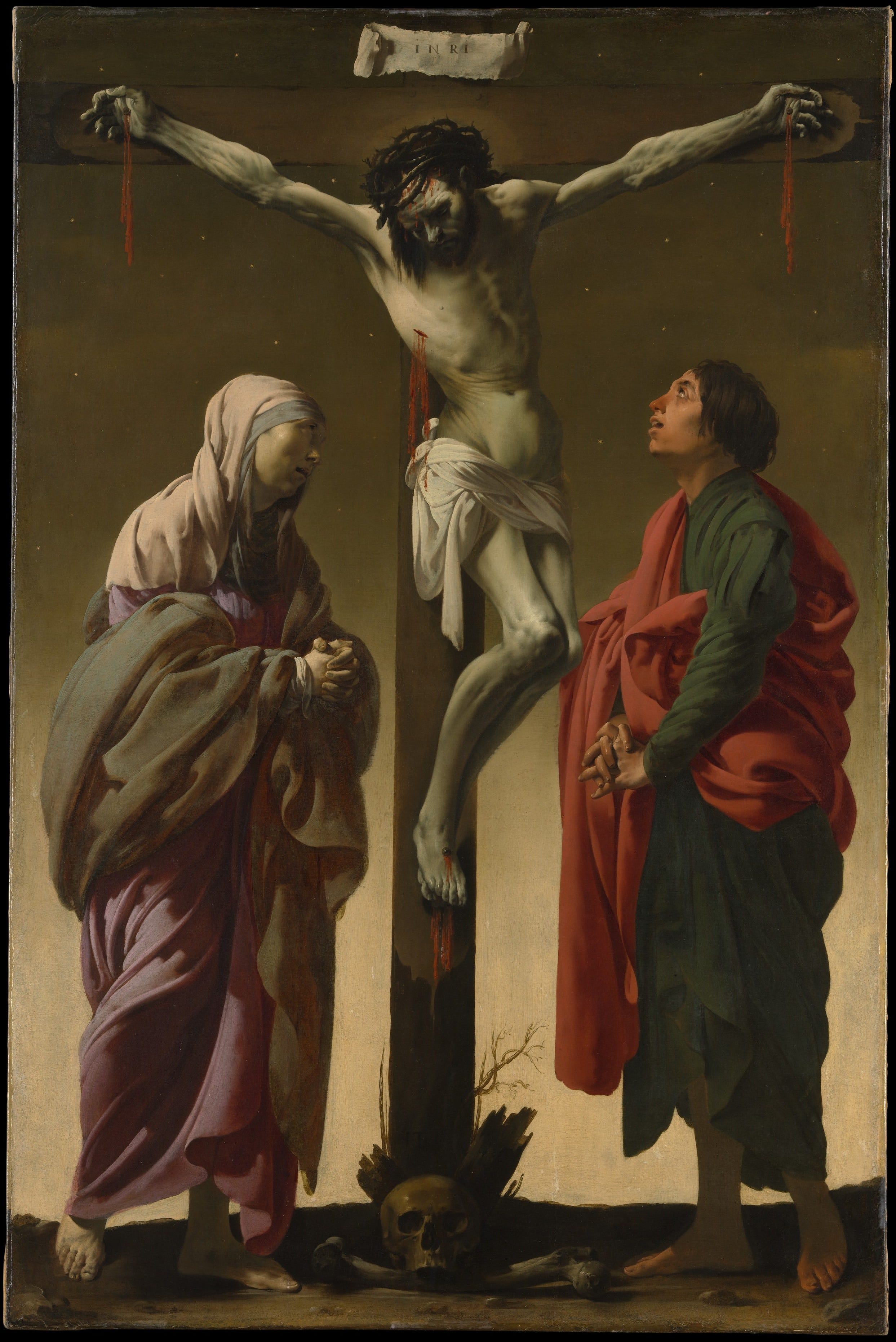
Red was also used to depict the blood of Christ—a potent symbol of sacrifice and redemption—which was often used to portray dramatic realism and evoke strong emotion from the beholder. The physicality of the blood-red paint helps to emphasize His wounds and suffering, providing worshippers with a clear focus for devotion and reflection.
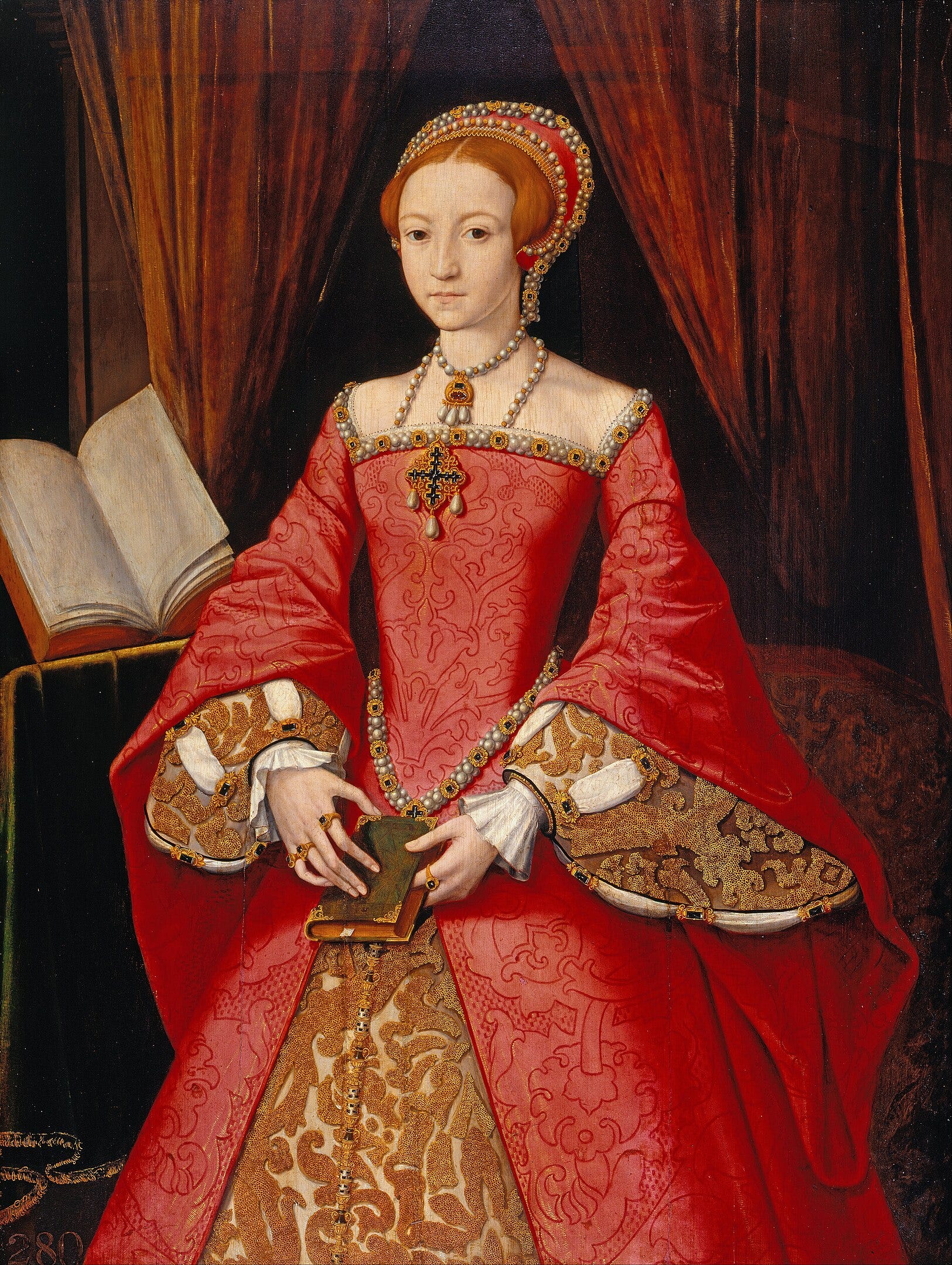
World leaders also went on to wear red clothing in their portraits as a way to showcase their power. We can see that here, in the portrait of Princess Elizabeth I preparing to assume her position as a powerful monarch in the Tudor dynasty. Her richly decorated red dress and red coif, or close-fitting cap—likely painted with synthetic vermilion—send an unequivocal message of the young woman’s political and moral strength.
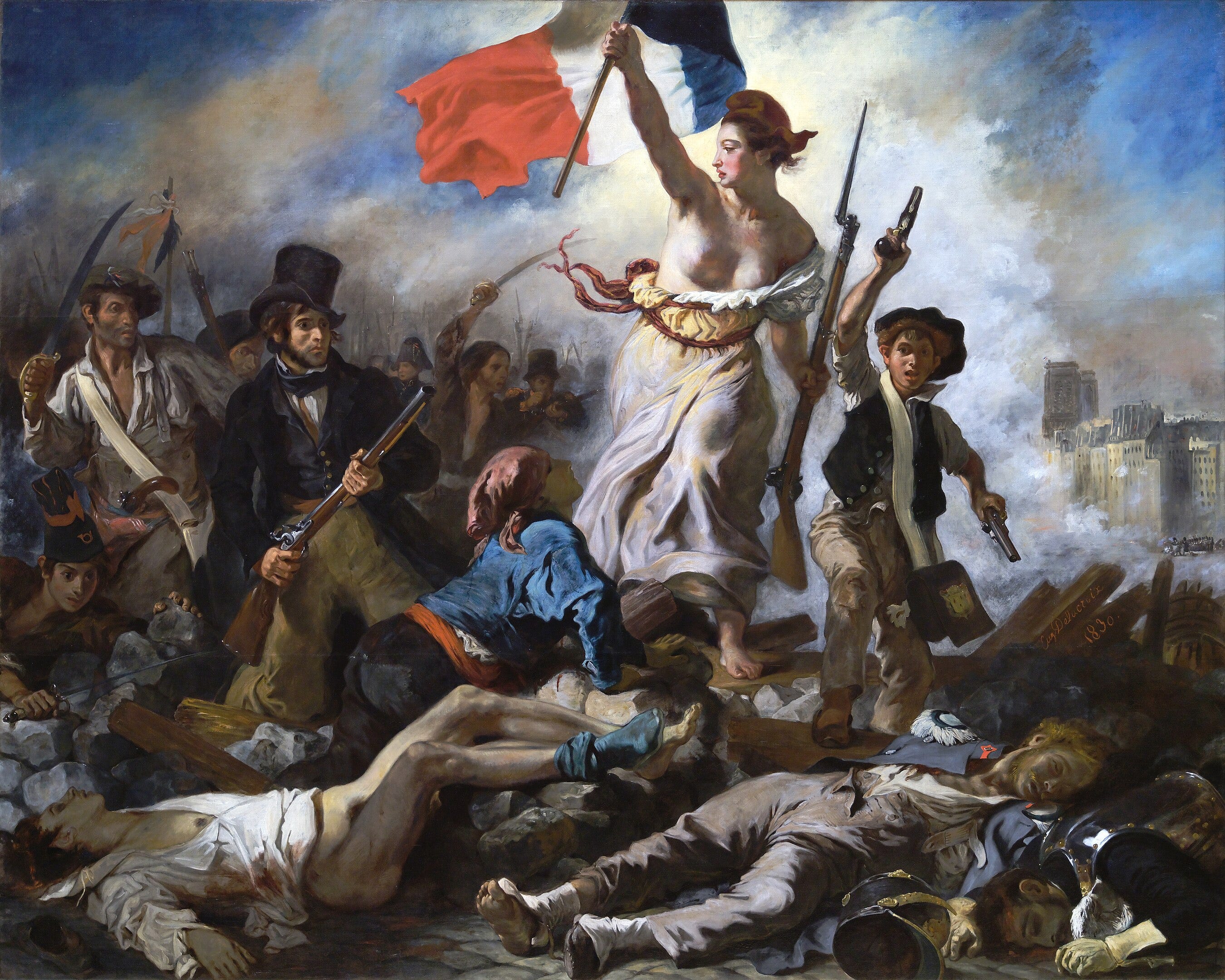
After the fall of the monarchy in the 18th century, however, the shade was taken up by revolutionaries around the world to symbolize new liberties and freedoms: from French revolutionaries and their red Phrygian caps to the Bolshevik, Cultural, and Cuban revolutions.
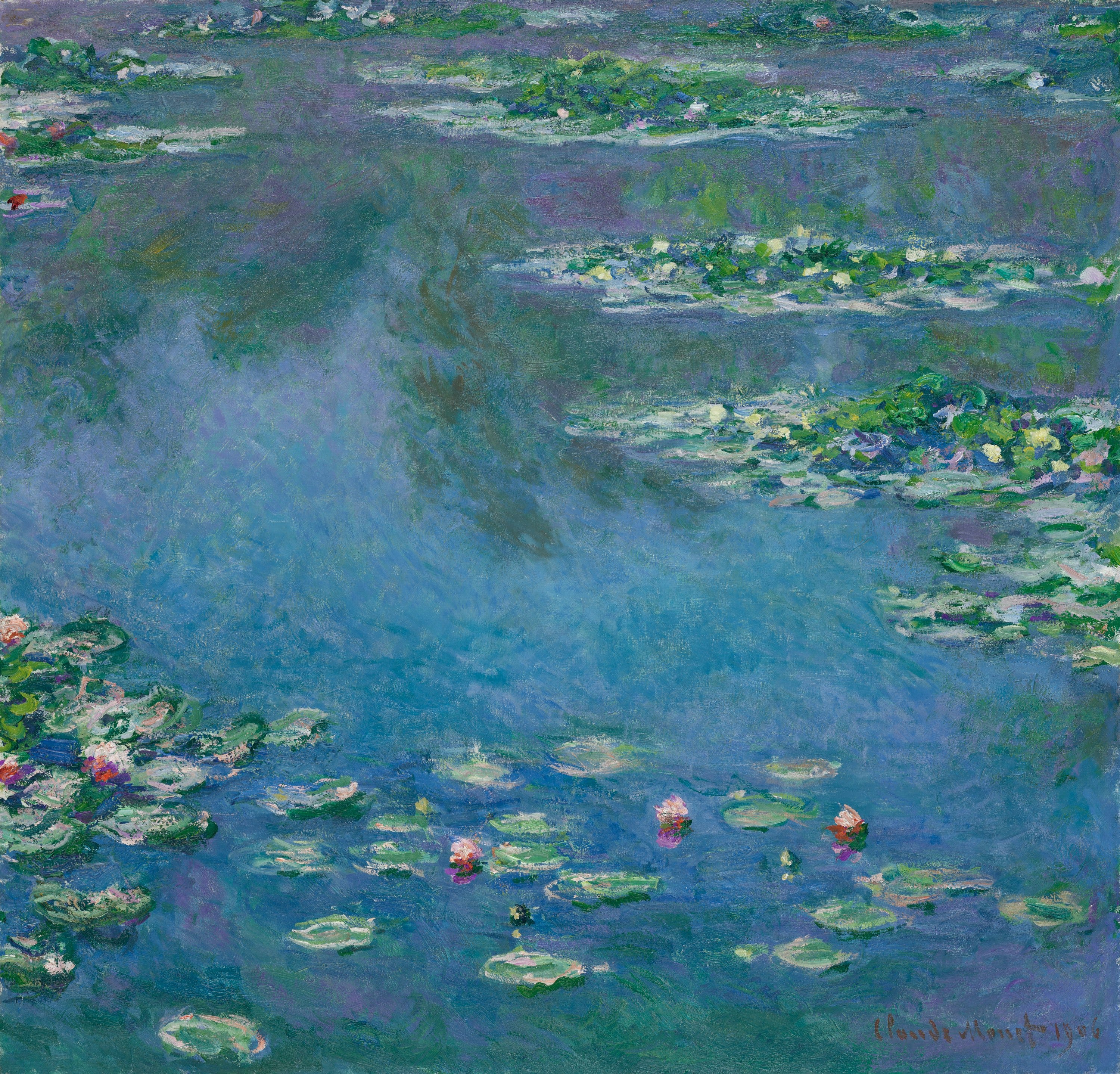
Neither the price nor the toxicity of vermilion stopped it from making its way into artists’ palettes. We can see remnants of the pigment in William Turner’s paint boxes from the 19th century, and in the works of the Impressionists.

Claude Monet used it in his monumental Water-Lilies to highlight the scarlet flowers, which punctuate the shimmering surface with vibrant flashes of color.
3. Red Lead/Minium
Red Lead, better known as Minium, was mined near Spain’s River Minius, but could also be synthetically made by heating white lead until it’s yellow, then orange, and finally red. This once again toxic pigment was used by medieval illustrators who would employ the pigment for the red capitals in their illuminated manuscripts.

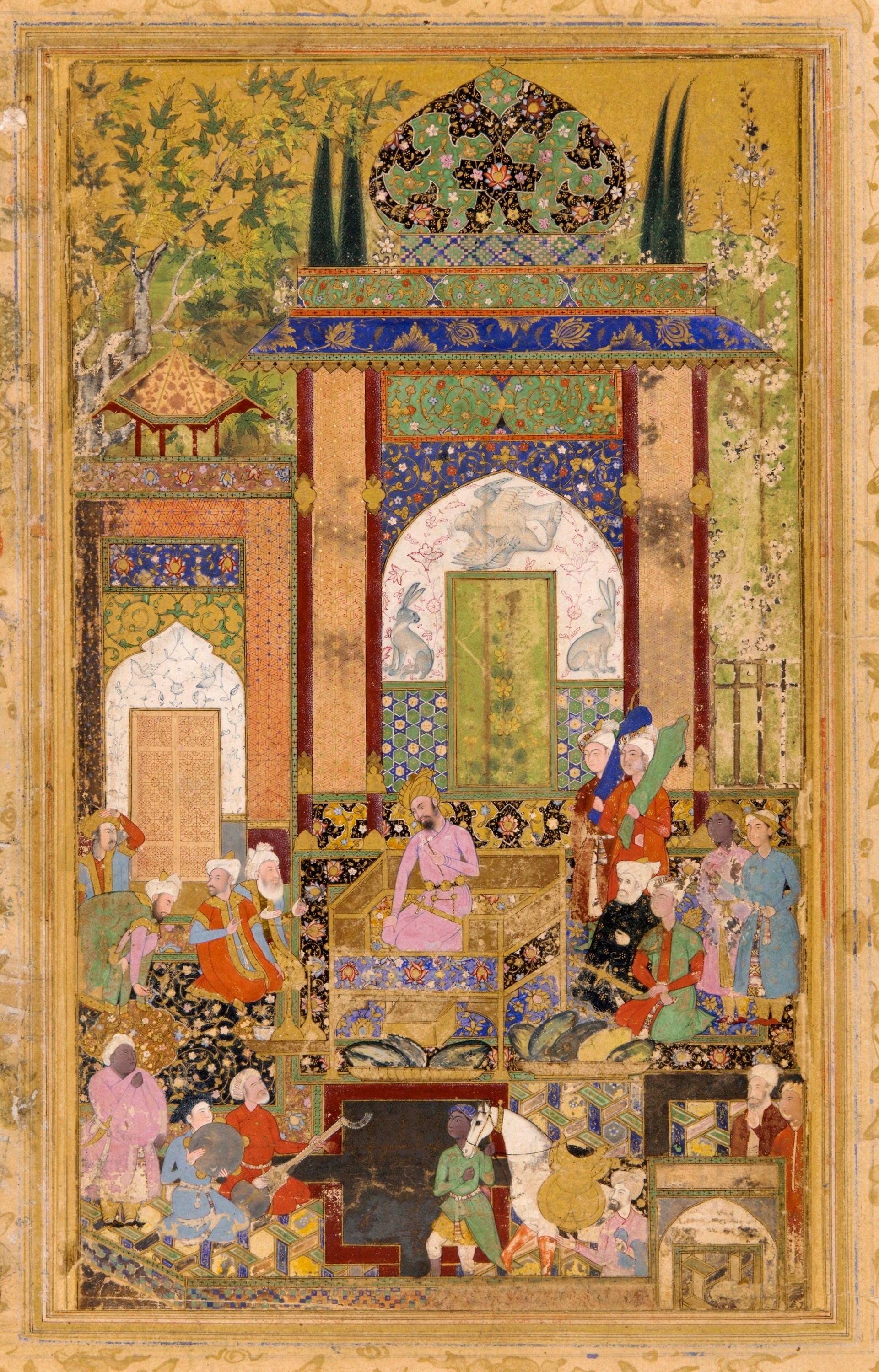
An artist working with minium was known as a miniator, who made miniature, so the term miniatures, which was originally used for these orange-red letters, eventually became a descriptor for any small feature. It was most popular with Mughal artists from India and Persia in the 17th and 18th centuries.
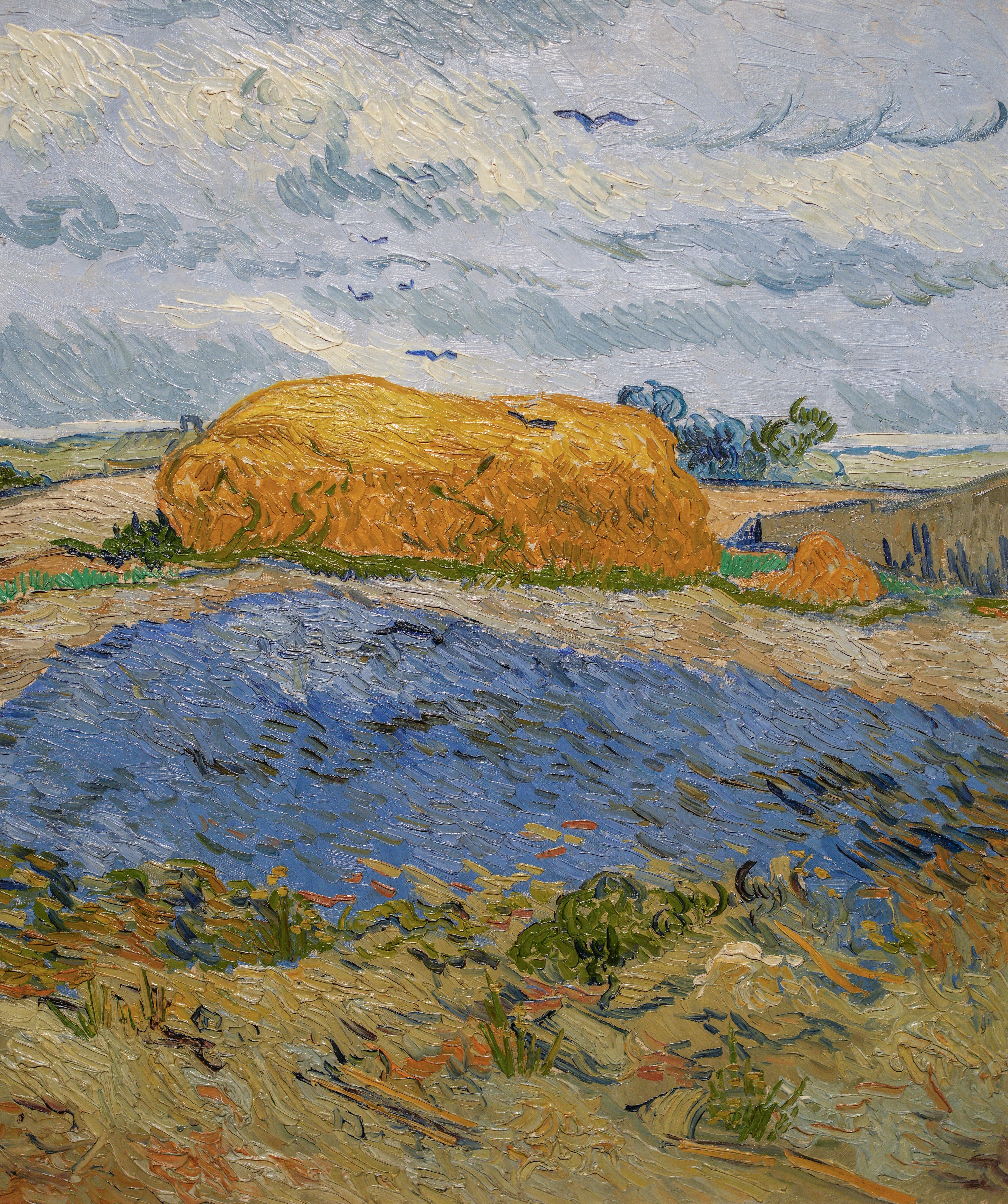
Vincent van Gogh also used red lead in his paintings. Unfortunately, this pigment tends to lighten when exposed to light, which has caused many of his paintings’ original vibrant red to fade to white. This effect can be seen in “Wheat Stack Under a Cloudy Sky.” The scene appears to have been painted after a heavy rainfall, apparent by the large puddle of water in the foreground. We can see crows flying across the center of the scene, reflected in the water. Vincent’s strong diagonal brushstrokes tilt the composition to the left and suggest wind moving from the right. The red paint, specifically, which has now lost its original intensity, is here, in the wheat stacks.
4. Venetian Red
During the Renaissance, trade routes were opened up to eastern and central Asia, and new varieties of red pigment and dye were imported into Europe, usually through Venice, Genoa, Seville, and Marseille. The pigment and dye merchants of Venice imported and sold all of these products, but also manufactured their own, one being ‘Venetian Red,’ the name of the pigment, and later this warm shade of red. This was an earth pigment that comes from red hematite, a common iron oxide compound found in rocks and soil.
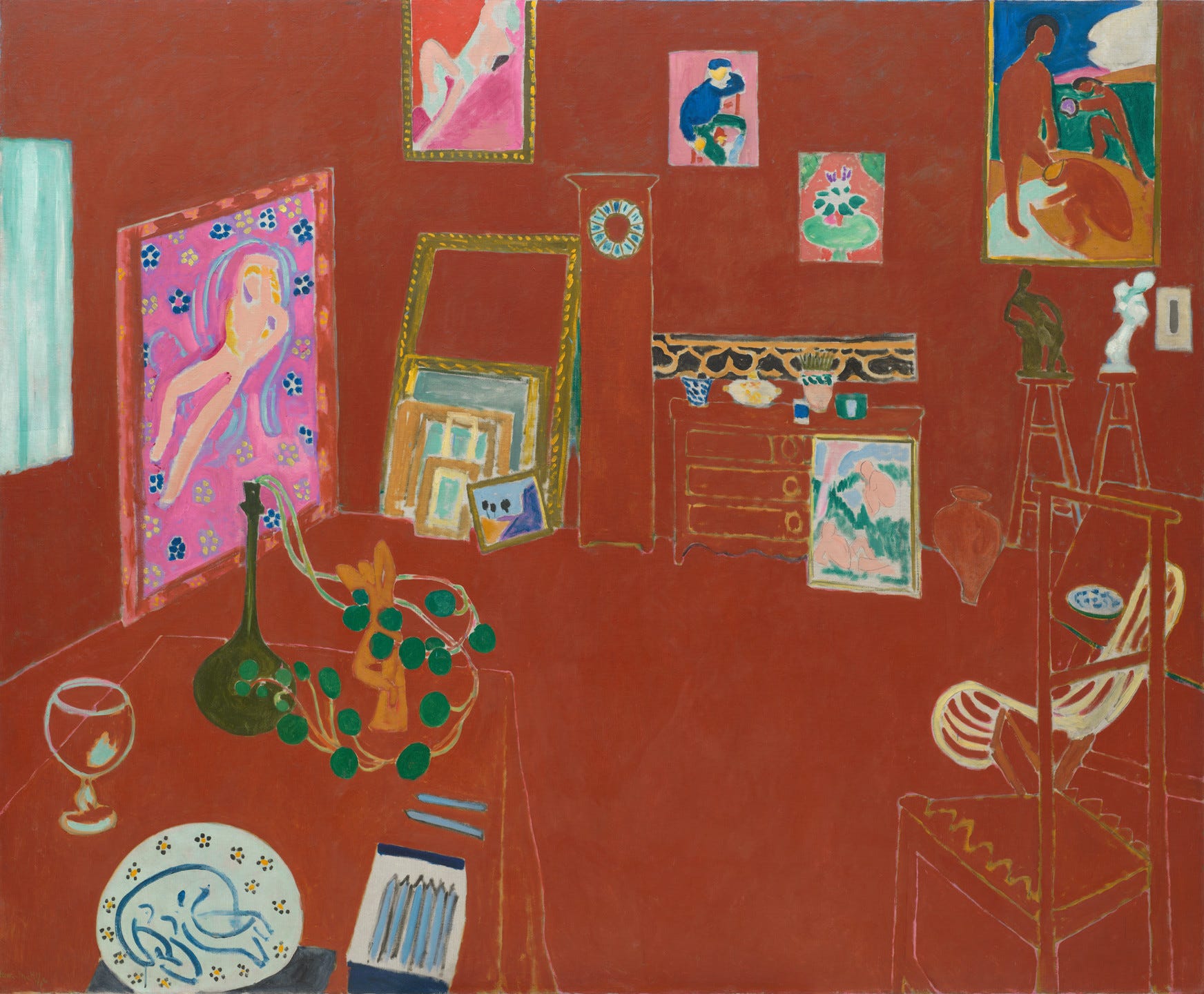
The most famous “red” painting in modern history, aptly named The Red Studio by Henri Matisse, is done with this pigment, covering almost two-thirds of the canvas. This piece was not originally the Venetian red shade we see before us. Matisse had painted the walls blue, the floors pink, and the furniture ochre. Then he waited about a month and hurriedly covered the canvas in red; we can see this speed in the UV photo, where the vigorous brushstrokes and leftover brush hairs remain on the painting to this day. UVF imaging of the painting also shows an intense green fluorescence that’s present only in the red sections, which suggests that the artist selectively added a natural resin to the red paint in order to add a gloss to it, while the other colors remain matte. In this painting, Matisse introduced the notion that color could create the full sensation of space, a flatter space, sure, but now all the elements flow within it. He was one of the first 20th-century artists to make color the central element of the painting, chosen to evoke emotions, as he wrote,
“a certain red affects your blood pressure.”
5. Insect Red
Red also came from insects. One fed on the sap of Mediterranean oak trees, called ‘Kermes’ in Arabic, which eventually mutated to ‘Crimson’ and supplied artists in Europe and western Asia. In the Americas, the cochineal insect, which lives on prickly pear cacti, supplied the Americas with the red pigment ‘carmine.’ This was the Americas’ third most valuable export in the 16th century, right behind gold and silver. By crushing the bodies of these insects, red pigments were obtained that were surprisingly non-toxic, reliable, and astonishingly vivid. These qualities made them indispensable then and, to the surprise of your makeup bag today, are still essential for beauty products.
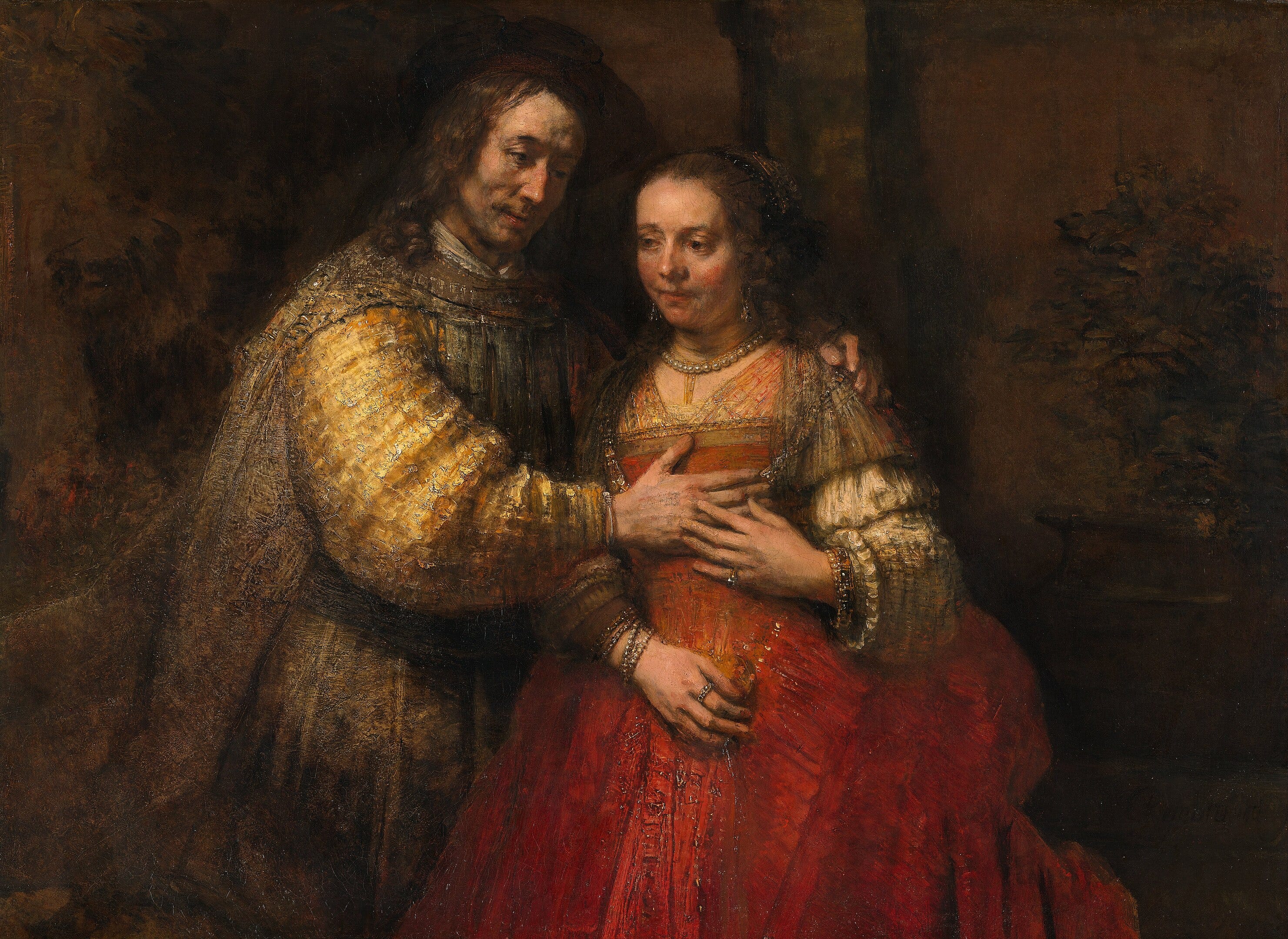
We can see this ‘Cochineal Carmine’ Red being used by Rembrandt here in the woman’s dress. The story of our subjects is from the book of Genesis in the Old Testament. Isaac and Rebecca were seeking refuge in the lands of King Abimelech. Fearing that the locals might kill him because of his wife’s beauty, Isaac claimed they were siblings. They were, however, caught in a moment of intimacy by King Abimelech, which revealed their true relationship. Rembrandt depicts them in a tender moment, as Isaac’s left arm holds Rebecca in a protective gesture while the other reaches out to lay a hand gently on her chest. According to his letters to his family, Vincent van Gogh was reduced to tears in front of it, writing that he
“would gladly give up ten years of his life to sit in front of the painting for two weeks, eating only a stale crust of bread.”
The paint itself was applied thickly, almost with an exceptional sense of freedom, and the bottom end of the paintbrush was used to add scratches onto the canvas.
6. Madder Red
Madder, the common name for several dye plants in the root of Rubia tinctorum, contains the naturally occurring organic compound alizarin. The roots are crushed into a powder, heated in a liquid, and finally mixed with metal salts or an alkaline to make red pigments, which clump together into a solid form that artists can use. This pigment offered a steadier, subtler red that leaned more towards orange.
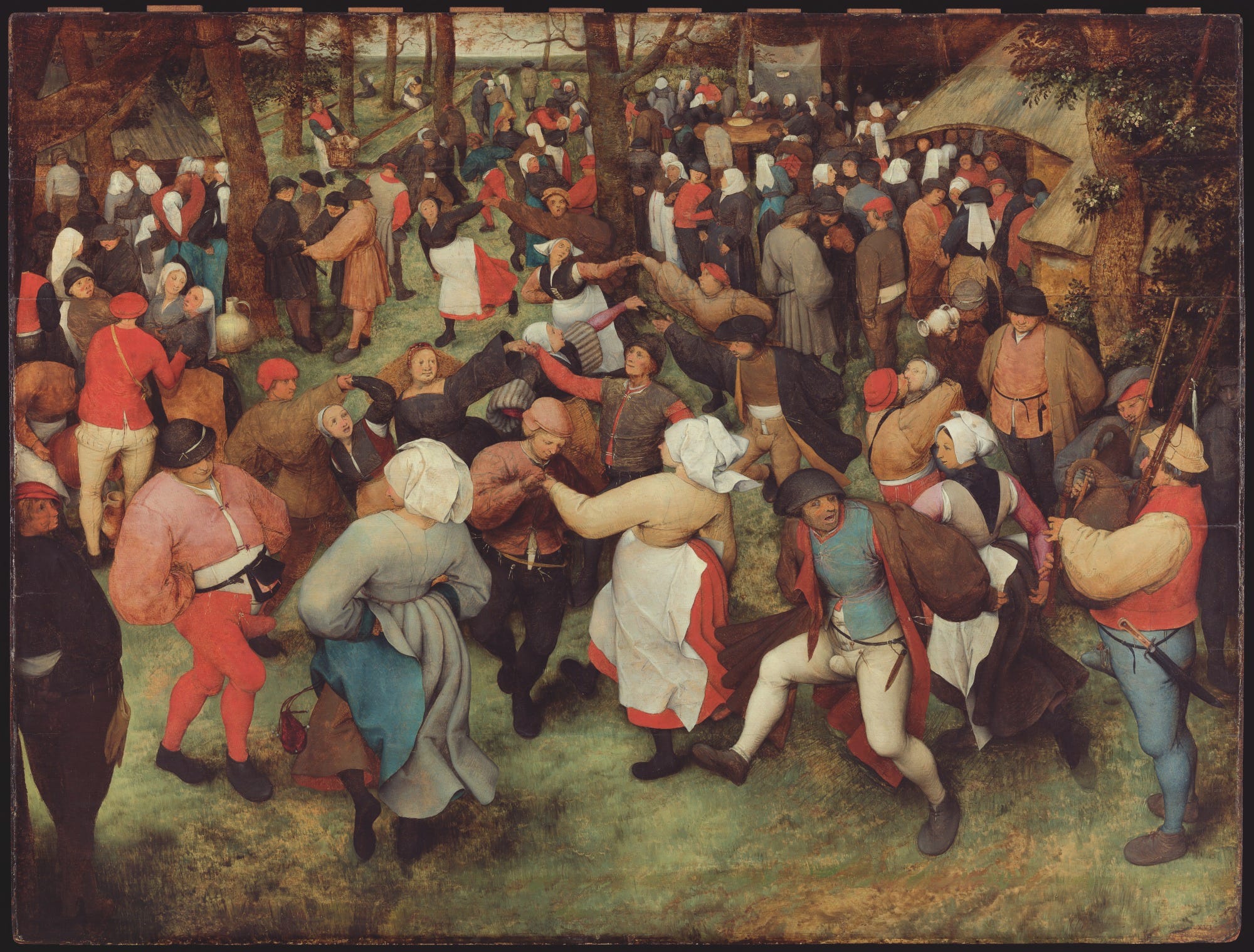
It was used in Renaissance Flanders, as we can see in Pieter Bruegel the Elder’s painting “The Wedding Dance.” 125 wedding guests are celebrating a newlywed couple in a rural village. The figures are painted simply, with exaggerated poses that make the dancers appear a bit clumsy. While today, a scene like this is considered an ordinary depiction of everyday life, it would have read as a moral warning at the time the piece was painted. Viewers would have connected this joyful act of dancing to desires of sinful behaviour, and the original red, now orange, color worn by all revellers as a symbol of the sin they’re displaying.
A synthetic version of alizarin was synthesized in 1868 by two German chemists, Carl Carl Graebe and Carl Theodor Liebermann. Alizarin crimson, or alizarin madder as it was named, was an identical replication of the naturally occurring pigment, but it had a stronger tinting power and transparency, which made it a favorite among artists despite its tendency to similarly fade over time. Tradition, however, clearly wins over permanence, as Winsor & Newton—a producer of fine art products—still makes some of their paints from the original madder roots.
7. Synthetic Oxides
As the 19th century began, synthetic oxides that were light-fast became more common. They come in all colors, with their exact hue dictated by how much heat and moisture they endured during production. These have now become especially crucial as Earth’s natural pigments are gradually depleted.
One such pigment is cadmium red. In 1817, the German chemist Friedrich Stromeyer discovered cadmium—a soft, silvery white metal. The first color of the cadmium family was yellow, which, after a century, upon mixing it with the element selenium, led to the creation of cadmium red, which was commercially sold from 1910 onwards. Cadmium is dissolved in an acid, mixed with sulfur, and heated to control the color and purity of the final product. This process is precise and controlled, not to mention poisonous, but it did provide artists with a more permanent red pigment that was an alternative to the more toxic vermilion.
Henri Matisse was one of the first champions of this new pigment, and even tried to get his friend Pierre-Auguste Renoir to make the switch. Though the more established artist returned the paint, saying, “It is very irksome to change.”
Cadmium red was also used by more modern artists such as Jackson Pollock and Barnett Newman. In Newman’s “Untitled 3,” we see a canvas, stretched over an unusually thick frame, with two vertical strips of cadmium red and silver gray.

Another synthetic pigment is ‘quinacridones’—a family of pigments that has given us vibrant reds, as well as violet shades like rose and magenta. These new shades expanded artists’ palettes across watercolors, oils, and acrylics by offering better transparency, mixing, and glazing options.
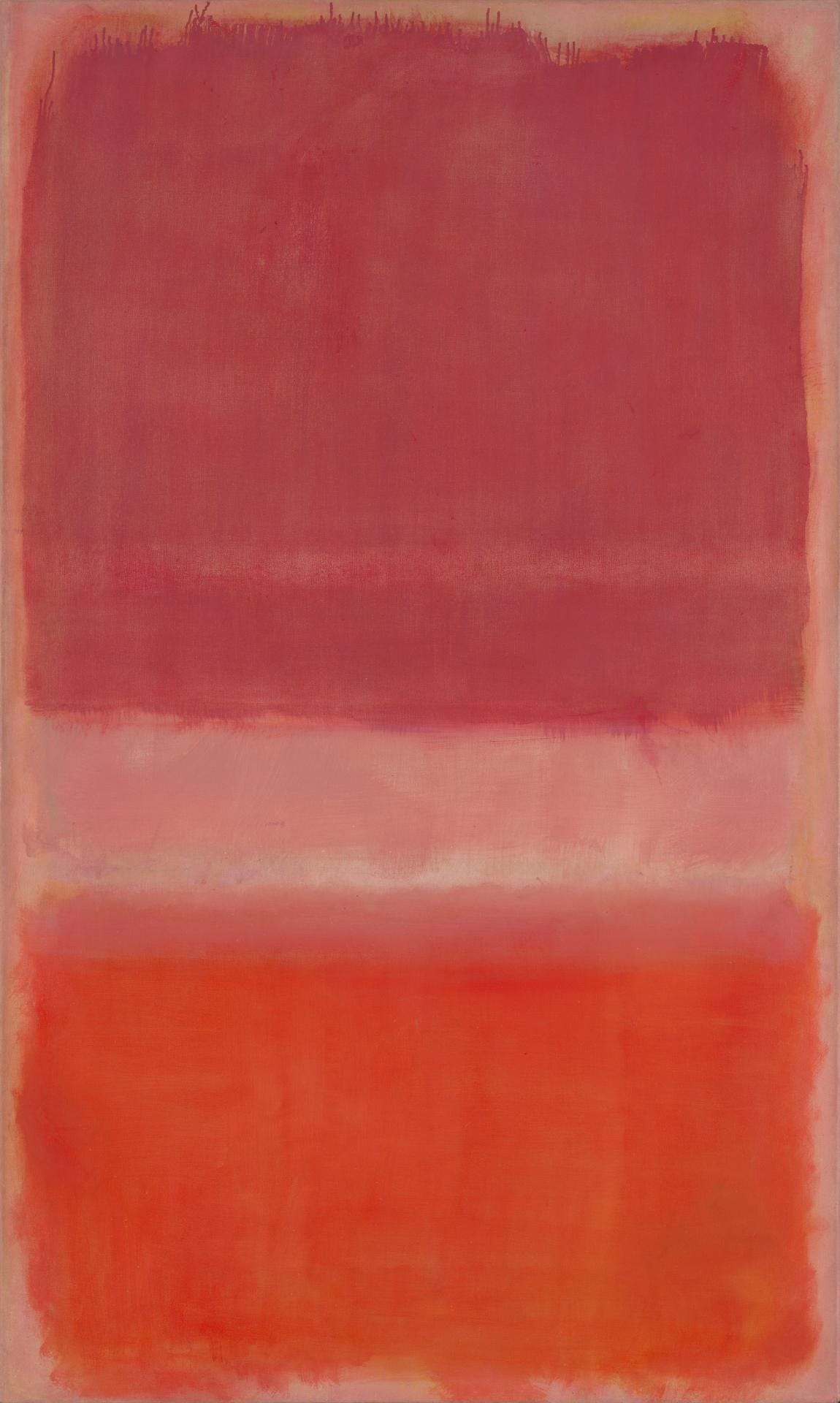
The American artist Mark Rothko, known for his color field paintings, used quinacridone magenta to paint blocks of color on his canvases. In this piece, however, “Untitled (Red),” he most likely used synthetic polymer paints, oils, and resins mixed with red pigments to create layers of thin washes for luminous depth. It is a simple composition, but in its simplicity, it is capable of inspiring deep emotions. It is an anecdotal story that Rothko’s paintings have brought viewers to tears, and that was his intention—to move people with his art. He said,
“I’m interested only in expressing basic human emotions—tragedy, ecstasy, doom, and so on. And the fact that a lot of people break down and cry when confronted with my pictures shows that I can communicate those basic human emotions.”
As we saw today, before there were words for danger, love, or power, there was red. It has marked sacred spaces, crowned rulers, fueled revolutions, and anchored some of the most emotionally charged works in art history. To follow the chronology of the pigment is to follow the history of human desire: our fears, our hopes, what we revered, and what we needed to be seen.
Hi. I want to thank you for your time, truly. Your support, whether it’s reading these posts, liking them, or watching any of my videos, means so, so much to me.
And if someone has shared this post with you, please don’t forget to subscribe to make sure you get the next post in the series - History of the color Blue.
Simply using the word, toxic does not seem sufficient attention is being paid to the fact that lead and mercury are very dangerous poisons. The potential role of these poisons on the mental state of many artists is worthy of mention.
¡Excelente material! Realmente, en el arte, el color nunca es “simplemente” un color... también es una forma silenciosa de dejar huella...