

Ivan Aivazovsky's Beautiful Tragedy
The Ninth Wave (1850)

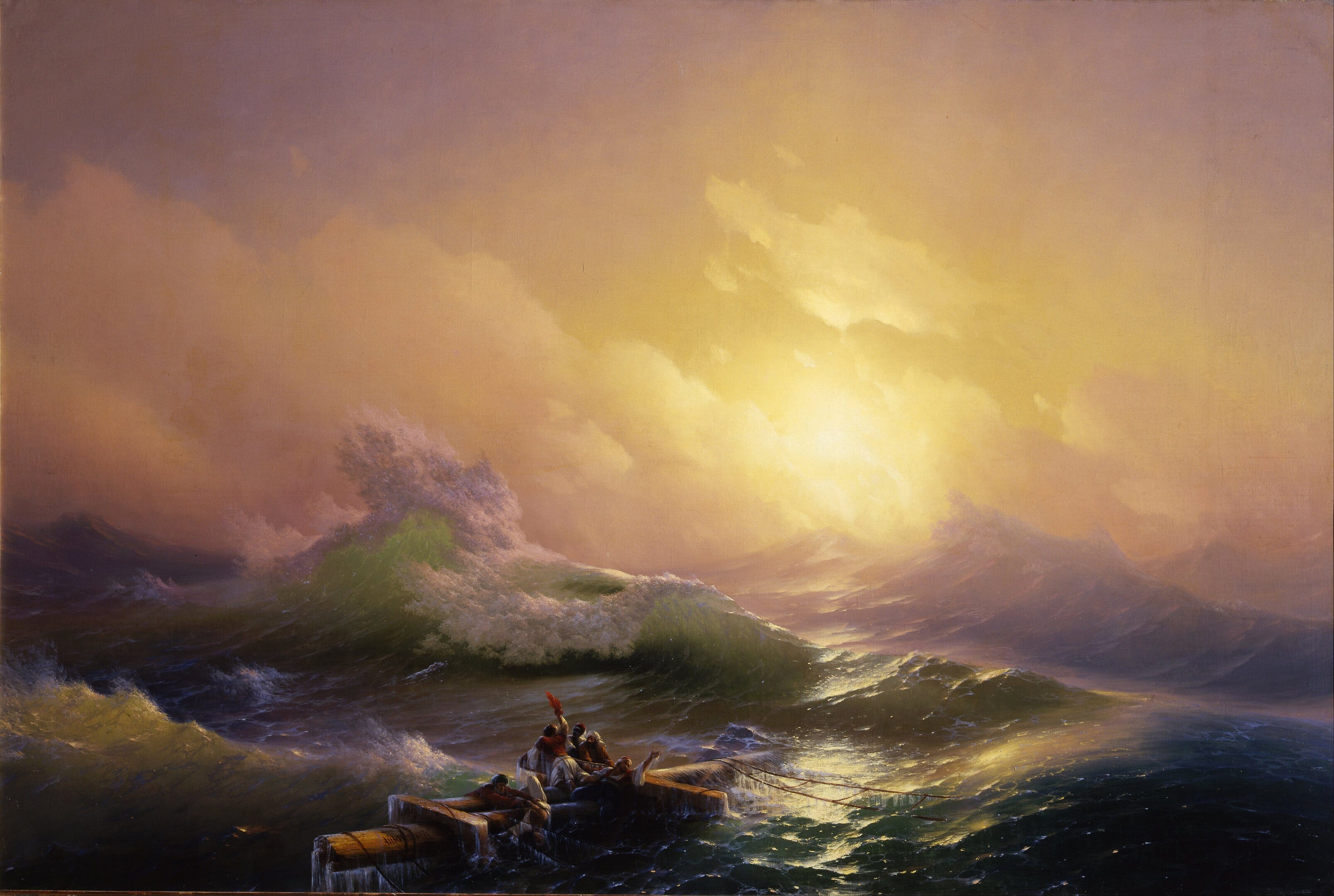
Ivan Aivazovsky’s The Ninth Wave, painted in 1850, is a seminal work in the Romantic tradition of seascape painting.
Measuring nearly 3.3 by 2.2 metres (10'10" by 7' 3"), this piece shows us the aftermath of a violent storm at sea. We see six human figures at the bottom of the painting, clinging to the wreckage of a shattered ship as dawn breaks across the turbulent waters.
The name of this painting refers to a maritime legend where each successive wave grows stronger, with the ninth being the deadliest, and hence the final trial a sailor must endure. The makeshift raft’s mast is in the shape of a cross, gesturing subtly toward Christian salvation without sermonizing. The beauty here is in the luminous interplay between the magnificence of nature and the endurance of humanity, rather than in overt religious symbols.
Aivazovsky, trained at the Imperial Academy of Arts in St. Petersburg, Russia, was celebrated for his ability to use light and color to inflect the scene with contradictory emotions.
The fiery sunrise floods the turbulent waters with a golden glow, softening the menacing sea’s seemingly inexorable will to consume. Against the darkening storm clouds receding in the back, the ocean’s movement is both a threat and an awe-inspiring spectacle we are lucky to witness. This drama is owed to Aivazovsky’s fluid brushwork and his skill in painting translucency.
Beyond its technical and national achievements, this piece is significant because it embodies a universal human drama: the clash between mortal vulnerability and elemental power. The survivors’ expressions are of exhaustion, hope, and a quiet will to endure, set within a world that is indifferent yet magnificently ordered.
Aivazovsky’s maritime art, characterized by an uncanny ability to render the sea’s temperament, won imperial favor; Emperor Nicholas I immediately purchased The Ninth Wave for the State Russian Museum, where it remains today.
With Love,
Behind the Masterpiece