

The Case for Re-seeing Art
What's the point in going back?

Hi! Just a quick update—we’ll pick up the series on mediums of art next week. It’s taking a bit longer than expected as it’s photography and there’s quite a bit to unpack, but I’ve been thinking about this topic for a while, so I hope you enjoy it.
There's a version of me (not my best self, I'll admit) who moves through a museum like I'm completing a task. Head up, eyes forward, ticking off the famous names before my feet start to complain and I locate the nearest café. I suspect I'm not alone in this.
And yet, recently, I found myself standing in front of a painting I’d walked past before, and this time it felt right to come to a full stop. It felt similar to spotting a familiar face across a crowded room and approaching to catch up. Not a close friend per se, but someone I had met before, whose name I knew, whose energy I could recall, someone who made the room feel slightly less unfamiliar.
So I stayed a little longer than I had planned. It turned out that there was more for both of us to talk about.
A study conducted in the permanent collection of the Metropolitan Museum of Art (the MET) in New York City found that when visitors return to a work of art, their engagement with it increases from 33.9 seconds to 50.5 seconds—about a 49% increase. And what’s more is that half of the visitors, 55.3% to be exact, who viewed an artwork once actually returned, sometimes up to six times. That’s lovely to hear.
As we spend more time with the artwork tucked away in the corner of the room, the one that caught our eye on the first pass, we start building something. Familiarity, perhaps. Affection, certainly. Time is all our loved ones ever ask of us, and artworks are no different. So let's spend time together and see where the conversation takes us next.
Reminder: You can support Behind the Masterpiece and get access to members-only content for a few dollars per month, such as:
Access to paid subscriber articles
Unlock the full curriculum: From the ‘Language of a Masterpiece’ to the ‘History of Colors’
Ask me anything about your favorite works or upcoming museum trips
Ability to comment and join community chats
The First Visit
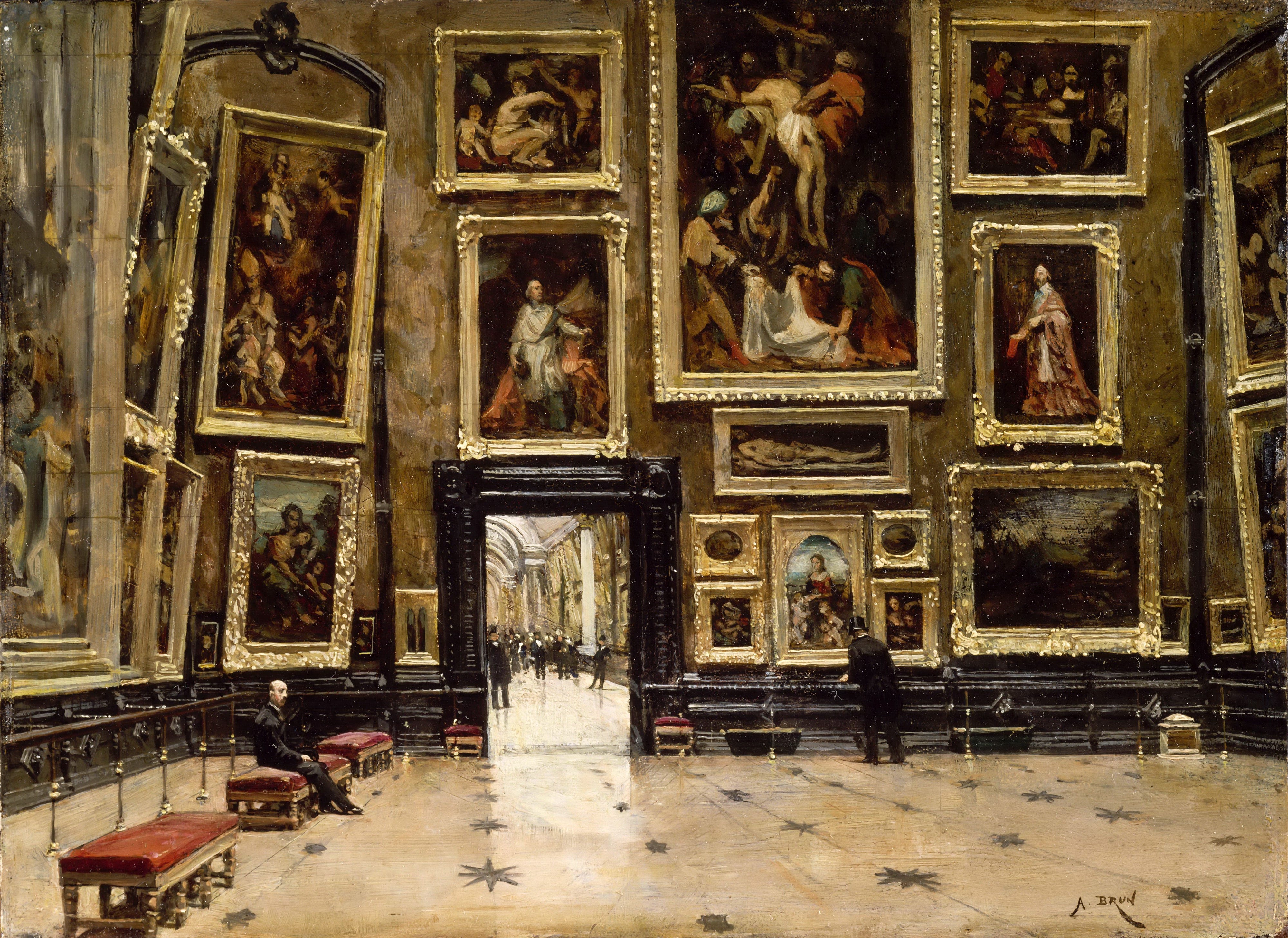
Most museum visits are rushed, and not entirely by choice. There's simply too much: too many halls, too many works, occasionally too many other people standing between you and the thing you're trying to see. So the first visit tends to become about recognition.
Do I know this one? Do I recognize any part of it? When is it from? Who made it?
That kind of thing. The subject, the artist, the time period, the style — the basic coordinates. Similar to what it’s like meeting someone for the first time. You're not really listening yet; you're building an impression, deciding whether this is someone you want to stay with a little longer or politely edge away from.
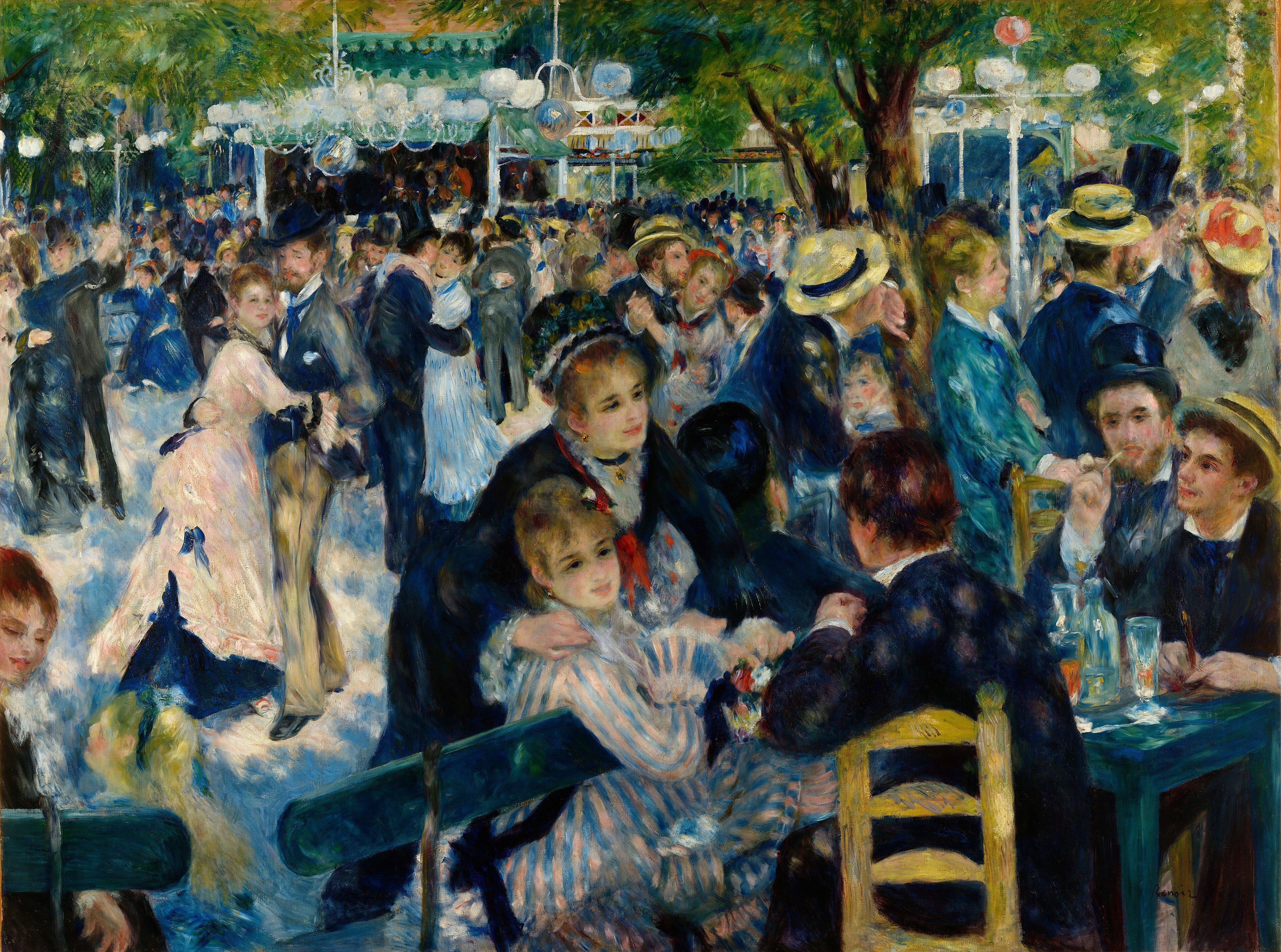
Let’s practice together. Take Auguste Renoir’s Bal du moulin de la Galette from 1876, currently held at Musée d’Orsay in Paris.
First time around, it reads pleasantly enough: people, sunshine, a summer afternoon. A group of figures, too many to count, are covered with dappled sunlight that touches every surface of the scene. It’s a gathering, as suggested by the title, from the 19th century, as suggested by the date. The short brushstrokes, the outdoor scene, the depictions of everyday people, and the focus on sunlight place it well within the Impressionist movement.
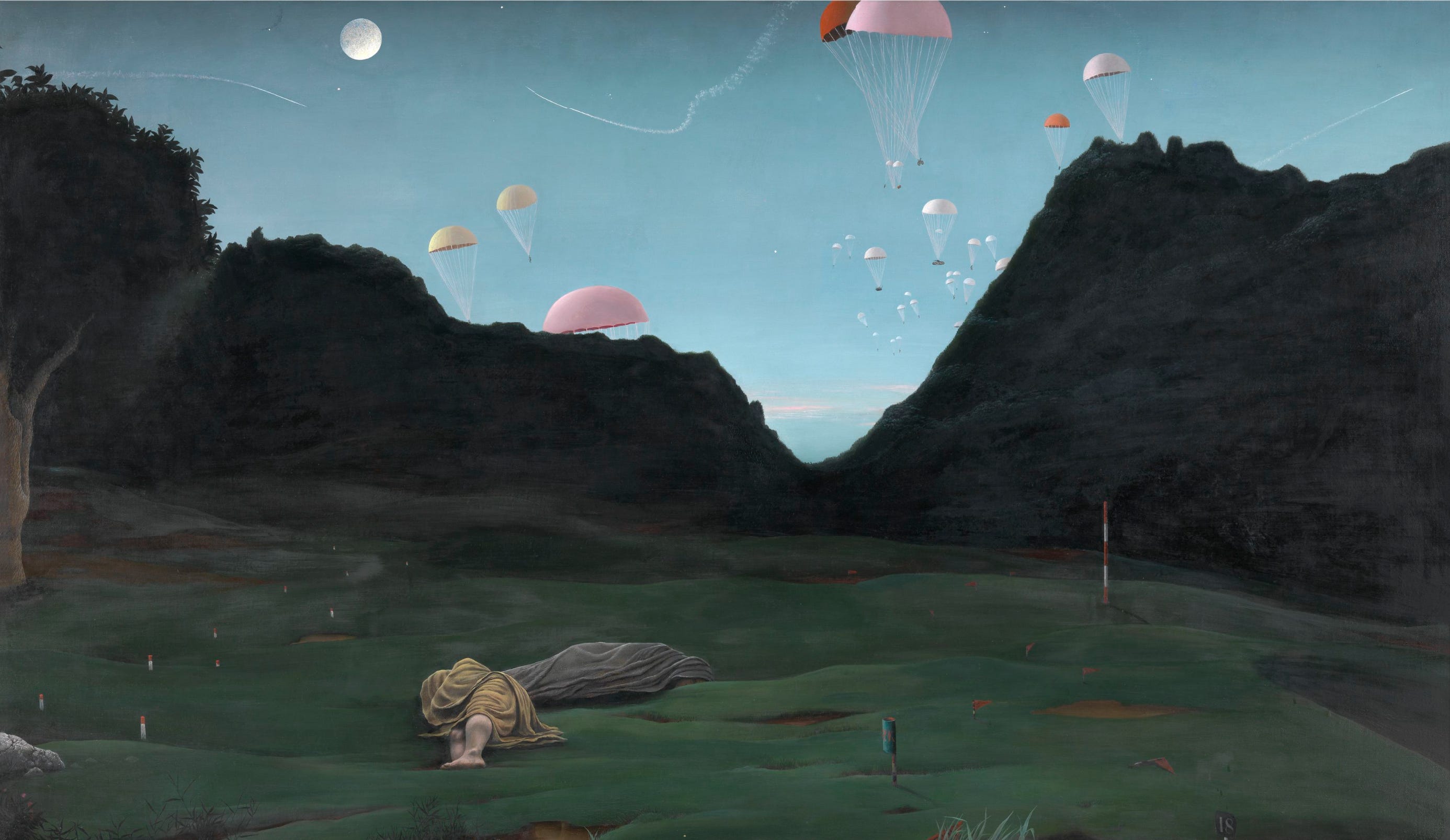
Now let’s take a more recent example— Het uur U III by the Dutch artist Pyke Koch from 1971, currently held at the Royal Museum of Fine Arts Antwerp in Belgium.
What can you see? A green golf course with hills nearby obstructing our view of the distance. A pale blue sky holds several pastel-colored parachutes and a full moon in its upper left corner. The dark green shades of the hills suggest it is dusk. In the foreground, a figure or two lie, their faces and bodies covered in cloth, with only one set of legs showing.
The Second Visit
The return is where things get interesting.
I think we return to a piece because it’s comforting. There’s no great mystery to it.
The artwork is the friend you make a beeline for in a room full of strangers — standing close, letting the temperature of things settle, before you feel brave enough to venture back out into the crowd. A familiar face in an otherwise unfamiliar, occasionally overwhelming space. So let’s thank them.
This goes some way to explaining why people return to a piece multiple times despite technically having already seen it. A painting viewed at different times in our lives—at 20, 40, and 60 years old—can feel like a different piece each time, changing as we do. We’re still getting to know each other.
And so, repeat viewing becomes partly a record of your own life and shifting interests. The friendship metaphor earns its keep here: old friends stay the same, yet every reunion feels different.
Let’s come back to Renoir’s Bal du moulin de la Galette. The crowd is still there, but this time we’re looking more closely at their faces, their clothes, their demeanors, and the setting they’re placed within — surrounded by trees, street lamps, and a stage in the background for the musicians providing the soundtrack.
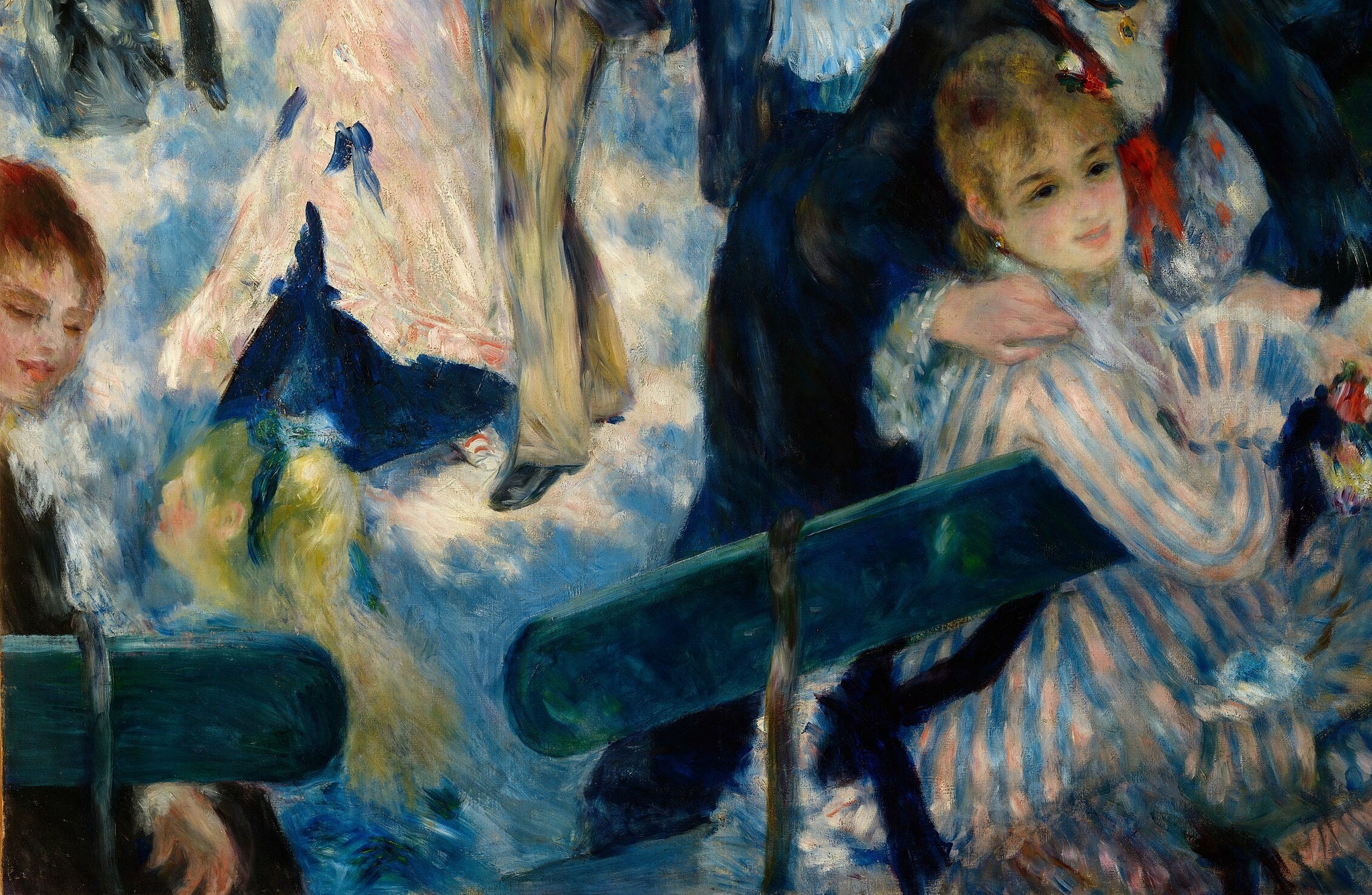
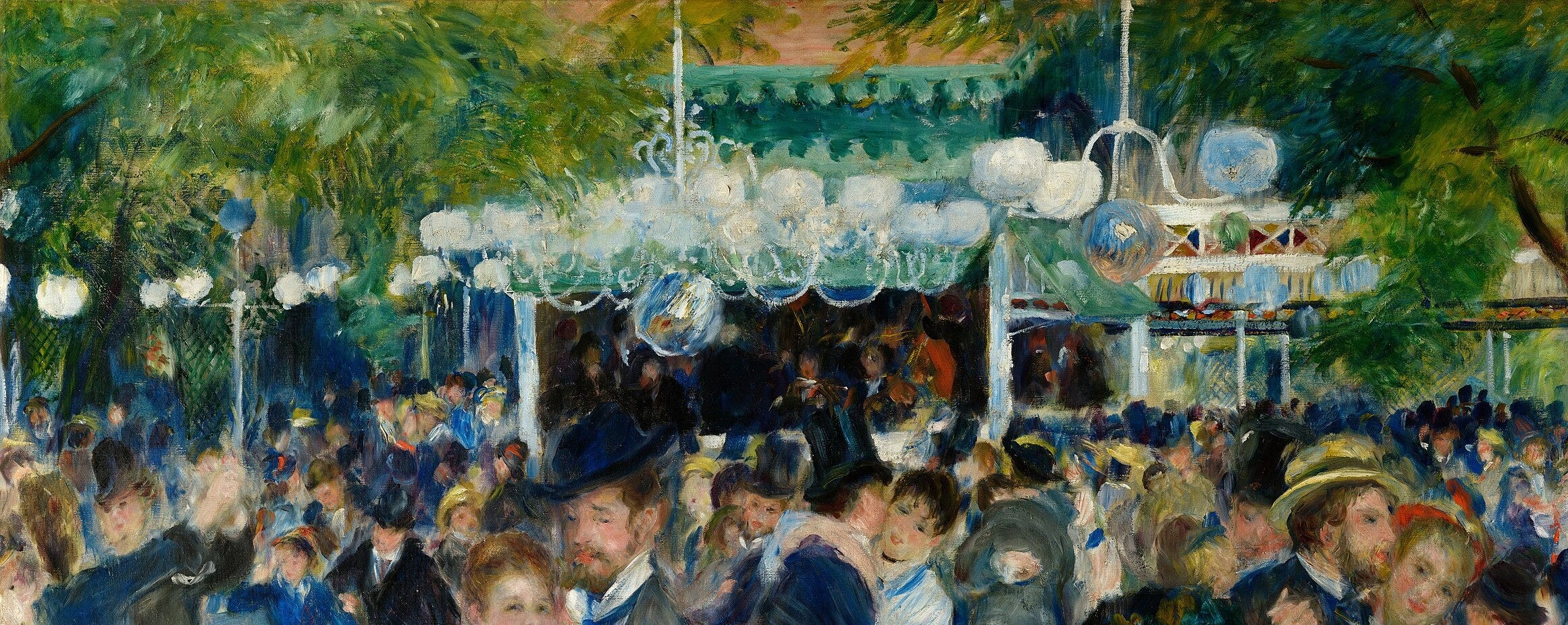
You might notice how fluid the brushwork is now, how it’s creating a sense of unity through how the paint is handled, both as a pictorial scene and a social one. Renoir has taken great care in showing the warm bonds between men and women, adults and children, the workers and the bourgeoisie.
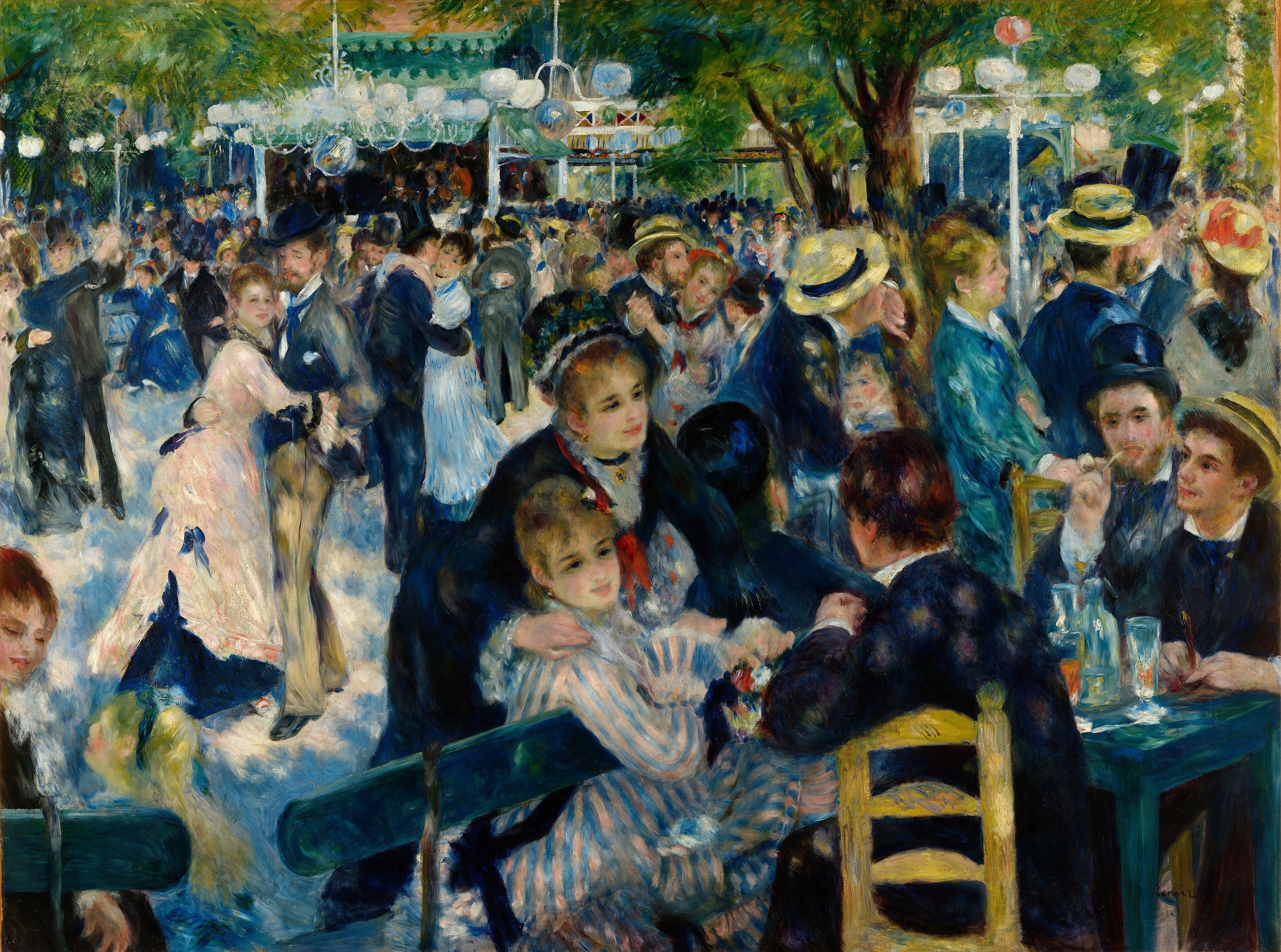
The figures that first appeared as a single crowd have begun to separate on second viewing into individual gestures: men holding the rhythm of a dance, pockets of conversation formed through glances and positioning, a child looking up at her mother.
The crowd that once read as one loud and unified entity has opened up. No single figure dominates—no class, importance, age, or gender takes precedence. All are here simply to enjoy a beautiful summer afternoon.
Now let’s try it with Pyke Koch’s Het uur U III.
This time, look more carefully at those parachutes. They're carrying something, but what could they be?
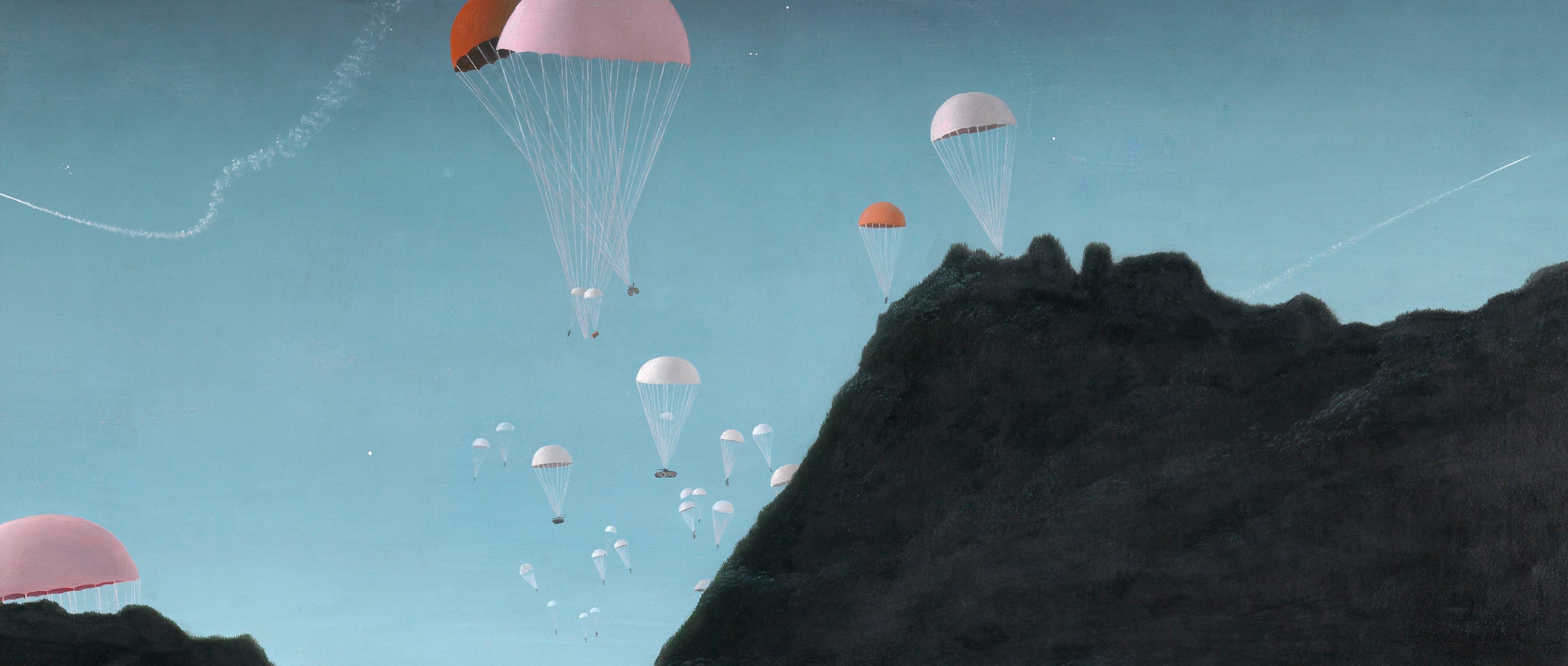
A tank, military equipment, and soldiers. These pastel-colored parachutes create quite a juxtaposition with the seriousness of the items they carry. Now this calming evening scene of a golf course, a setting reserved for the elite, becomes ominous. The moon insinuates a final hour, an end.
This feeling of uneasiness may bring you down to the figure or figures lying in the foreground. Reminiscent of Andrea Mantegna’s 1480 Lamentation of Christ, where the technique of foreshortening is utilized, you might now suspect that the visible figure in Koch’s piece is not only dead but rather has been killed.
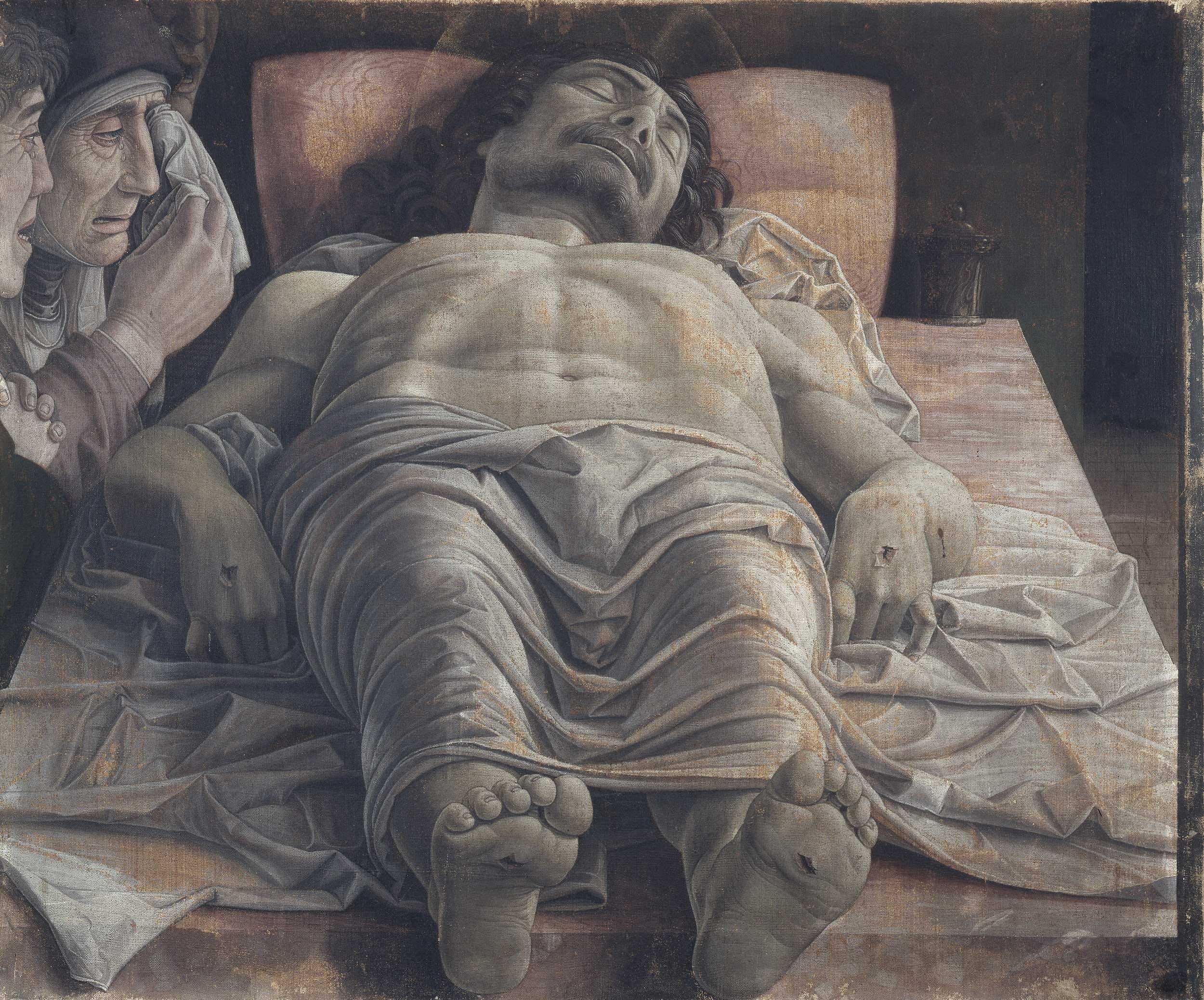
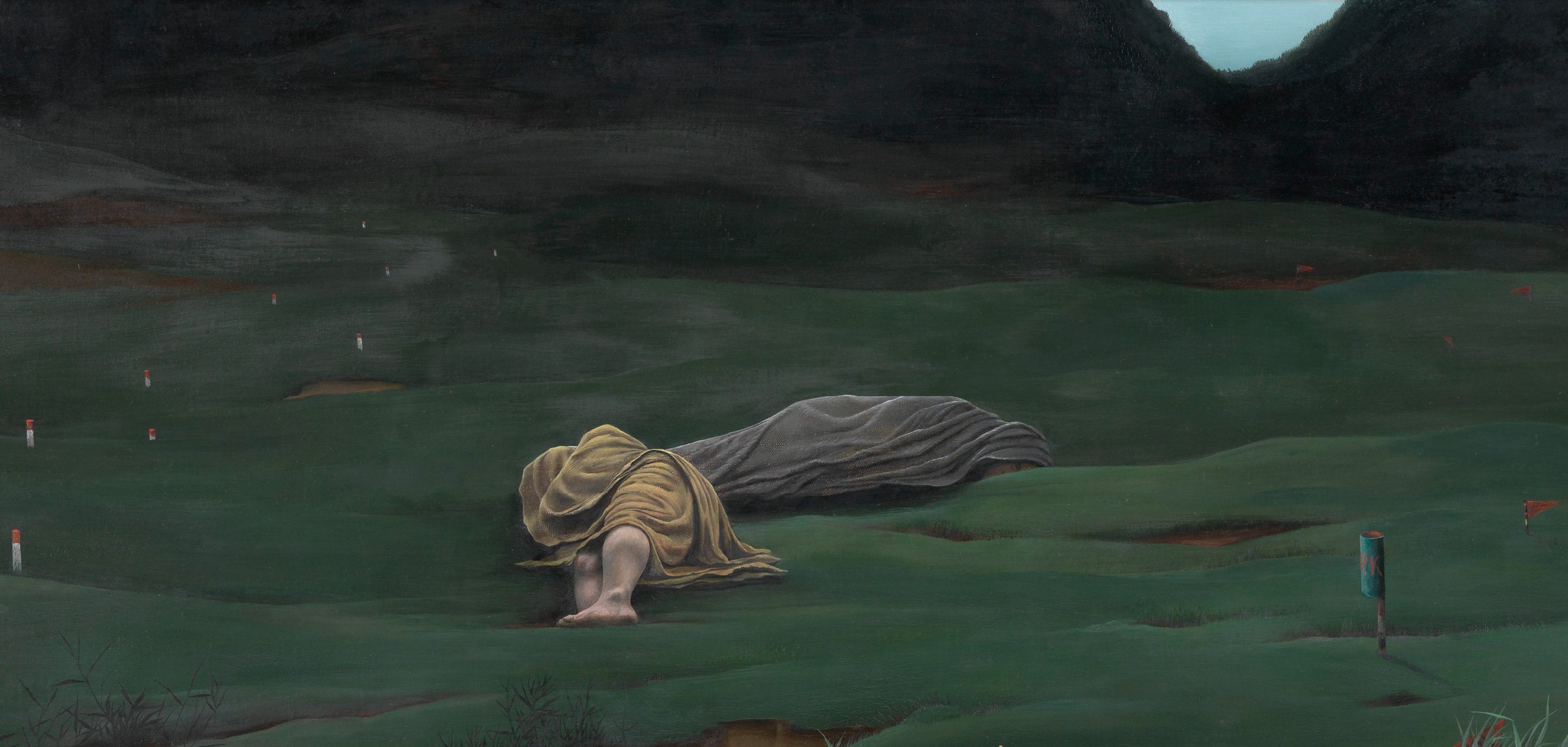
Is Koch suggesting that modern warfare has taken on the same structure as Christ’s suffering, only now restaged through military weaponry instead of wood and iron? This is where the artist has brought us. An ambiguous pocket of existence where the beautiful and the unsettling coexist without resolution.
None of this came from a label or from anything you’ve been told to read up on in advance. It only comes from staying with the artwork long enough for the ice to be broken, for trust to be built, and for vulnerability — yours and, if you’ll allow it, the painting’s — to find a warm place to settle into. That’s all it takes, really. A little time and the willingness to come back.
Behind the Masterpiece is a reader-supported publication. While I love keeping the doors open, the research required for stand-alone posts and deep-dive series is made possible by our paying members.
If you found value in today’s post, please consider joining us. And if someone has shared this post with you, please don’t forget to subscribe to make sure you receive the next post.
'A little time and the willingness to come back.'
Thanks!
A great read--a strong case for revisiting works of art. And surely this is why critics and art historians persist reconsidering familiar works?